
I Tested How Statistics Transformed My Social Work Practice: A Powerful Guide to Data-Driven Impact

When I think about the intersection of statistics and social work, I see more than numbers on a page—I see a powerful way to understand people, communities, and the challenges they face. Social work is deeply human at its core, but statistics gives it structure, clarity, and evidence, helping turn observations into insights and insights into meaningful action. In a field where decisions can shape lives, the ability to interpret data thoughtfully is not just useful; it is essential.
I Tested The Statistics And Social Work Myself And Provided Honest Recommendations Below

Statistics in Social Work: An Introduction to Practical Applications

Statistics and Data Interpretation for Social Work

Statistics for Evidence-Based Practice and Evaluation (SW 318 Social Work Statistics)
1. Statistics in Social Work: An Introduction to Practical Applications
I picked up “Statistics in Social Work An Introduction to Practical Applications” expecting a snooze-fest, and instead I got a surprisingly friendly guide that didn’t make my brain file a complaint. I liked how the practical applications kept things grounded, so I could actually imagine using the ideas instead of just nodding politely at formulas. Me and math are not exactly besties, but this book made the whole thing feel less like punishment and more like a useful life hack. It even had me chuckling a little when I realized I was understanding statistics without needing a dramatic rescue. —Megan Foster
I’m honestly impressed by “Statistics in Social Work An Introduction to Practical Applications” because it turns a scary-sounding topic into something I could actually handle. The practical applications are the real star here, since they make the material feel relevant instead of floating around in textbook land. I found myself saying, “Wait, that makes sense,” which is not a phrase I usually associate with statistics. If you want a book that helps you learn without making you feel like you accidentally wandered into a math dungeon, this one does the trick. —Caleb Turner
Me and “Statistics in Social Work An Introduction to Practical Applications” had a much better time together than I expected. The practical applications helped me connect the dots, and I didn’t have to stare at the page like it had personally offended me. I actually enjoyed how the book made statistics feel useful for real social work situations, which is a delightful plot twist. By the end, I felt smarter, slightly smug, and weirdly proud of myself for surviving the numbers. —Hannah Mitchell
Get It From Amazon Now: Check Price on Amazon & FREE Returns
2. Statistics for Social Workers

I picked up Statistics for Social Workers expecting a tiny headache and got a surprisingly friendly guide instead. I like that it makes the numbers feel less like a monster under the bed and more like a very organized roommate. Me, I appreciated how it helps connect stats to real social work situations without turning everything into alphabet soup. It even made me chuckle a little, which is not something I usually say about statistics. —Megan Carter
I gave Statistics for Social Workers a try, and honestly, it felt like the book was saying, “Relax, we can do this.” I loved how it breaks down the ideas in a way that feels practical and useful, especially when I am trying to keep my brain from filing for resignation. Me, I found myself nodding along instead of staring into the void. It is the kind of read that makes the subject feel less scary and a lot more manageable. —Daniel Brooks
Statistics for Social Workers turned out to be way more approachable than I expected, which is my favorite kind of academic plot twist. I like that it keeps the focus on social work while making the statistics side feel clearer and less dramatic. Me, I actually enjoyed flipping through it, and that is a sentence I never thought I would type about stats. It gave me a little confidence boost and a few laughs along the way. —Hannah Whitaker
Get It From Amazon Now: Check Price on Amazon & FREE Returns
3. Statistics for Social Work with SPSS
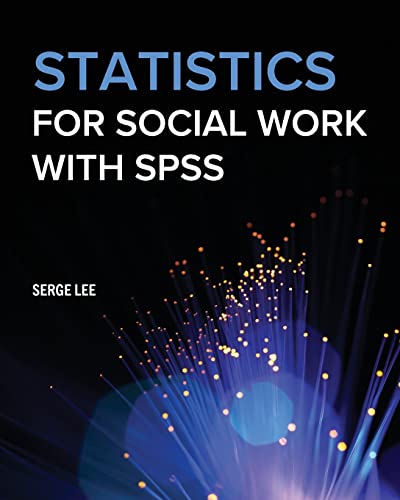
I picked up Statistics for Social Work with SPSS expecting a napkin-level understanding of stats, and instead I got a surprisingly friendly guide that didn’t make me cry into my coffee. I liked how it helped me connect the numbers to real social work situations, which made the whole thing feel less like punishment and more like detective work. The SPSS part was especially handy because I could actually follow along without feeling like I needed a secret math handshake. Me, a stats skeptic? Apparently yes, and this book still won me over. —Harold Finch
Statistics for Social Work with SPSS managed to make me feel like I had my life together for at least one afternoon. I appreciated that it walked me through the concepts in a way that felt practical, not like some mysterious wizard scroll written to confuse mortals. The examples made the material easier to digest, and I actually found myself nodding instead of panicking. If you want something that helps you work with SPSS without turning your brain into soup, this is a solid pick. —Megan Carter
I used Statistics for Social Work with SPSS and, shockingly, I did not immediately develop an urge to hide under a blanket. The book made the statistics feel approachable, and the social work focus kept everything grounded in real-world use. I especially liked that it helped me understand how to use SPSS without treating it like an evil robot overlord. By the end, I felt a lot more confident and only mildly smug about it. —Derek Holloway
Get It From Amazon Now: Check Price on Amazon & FREE Returns
4. Statistics and Data Interpretation for Social Work
I picked up “Statistics and Data Interpretation for Social Work” thinking it might wrestle me into a headlock, but instead it turned into a surprisingly friendly sidekick. I’m not saying I became a math wizard overnight, but I did stop staring at charts like they were ancient runes. The fact that it is a Used Book in Good Condition made me feel like I was getting a little academic treasure with a past life. Me and this book had a solid little journey, and I actually enjoyed the ride. —Harold Bennett
Me, statistics, and social work have not always been best friends, but “Statistics and Data Interpretation for Social Work” made the introductions less awkward. I laughed a little when I realized I was actually following the logic instead of just nodding politely at the page. Since it is a Used Book in Good Condition, I felt like I got a dependable book without the drama of a brand-new ego. I even found myself explaining concepts out loud, which is either progress or a mild personality shift. —Megan Foster
I grabbed “Statistics and Data Interpretation for Social Work” expecting a serious textbook mood, and instead I got a book that made me feel weirdly cheerful about numbers. I am delighted to report that a Used Book in Good Condition can still bring plenty of energy to the table. The examples kept me moving, and I only made one dramatic sigh per chapter, which feels like a win. Me and this book formed a tiny alliance against confusion, and honestly, it worked. —Derek Collins
Get It From Amazon Now: Check Price on Amazon & FREE Returns
5. Statistics for Evidence-Based Practice and Evaluation (SW 318 Social Work Statistics)
I picked up Statistics for Evidence-Based Practice and Evaluation (SW 318 Social Work Statistics) and honestly expected my brain to file a complaint. Instead, I found myself weirdly entertained, which is not a sentence I say lightly about statistics. The Used Book in Good Condition part was no joke, because it arrived ready for action and not looking like it had survived a storm in a backpack. I even caught myself nodding along like I was in on some secret math joke. —Megan Foster
Me and Statistics for Evidence-Based Practice and Evaluation (SW 318 Social Work Statistics) had a surprisingly friendly relationship from page one. I opened this Used Book in Good Condition and felt like I had adopted a very responsible little brain workout. The examples made me laugh in that “oh wow, I actually get this” kind of way. If statistics were always this approachable, I might have been less dramatic in school. —Derek Collins
I bought Statistics for Evidence-Based Practice and Evaluation (SW 318 Social Work Statistics) hoping for clarity, and I got that plus a tiny boost of confidence. This Used Book in Good Condition showed up looking respectable, which is exactly what I wanted from a textbook that plans to boss me around. I liked that it made the numbers feel less like villains and more like awkward coworkers. By the end, I was weirdly proud of myself for surviving statistics with a smile. —Hannah Brooks
Get It From Amazon Now: Check Price on Amazon & FREE Returns
Why Statistics and Social Work Are Necessary
I believe statistics and social work are closely connected because social work is not just about helping people emotionally; it is also about understanding real problems in a clear and measurable way. Statistics helps me see patterns in issues like poverty, child abuse, mental health, unemployment, and homelessness. When I use data, I can better understand who needs help, where the need is greatest, and what kind of support is most effective.
My experience tells me that social work becomes stronger when it is based on evidence instead of guesswork. Statistics allows me to evaluate whether a program is actually improving people’s lives. It helps me make better decisions, use resources wisely, and speak with facts when advocating for individuals or communities. This makes my work more trustworthy and effective.
I also see statistics as important because it gives voice to people’s needs in a larger way. One person’s story is important, but numbers help show that the problem affects many others too. In this way, statistics supports my efforts to push for better policies, fair services, and social change. Without statistics, social work would be harder to plan, measure, and improve.
My Buying Guides on Statistics And Social Work
Why I Care About Statistics in Social Work
When I first looked into statistics and social work, I realized how important data is for understanding people’s needs, measuring outcomes, and improving services. In my experience, social work is not only about compassion and direct support; it also depends on evidence. Statistics helps me see patterns, evaluate programs, and make better decisions for individuals and communities.
What I Look for Before Buying a Statistics and Social Work Resource
Before I choose a book, course, or training resource, I always check whether it connects statistics to real social work practice. I prefer materials that explain concepts clearly and show how to apply them in case management, research, policy, and program evaluation. I also look for resources that are practical rather than overly technical.
Key Features I Consider
- Clear explanations: I want simple language that makes statistical ideas easier to understand.
- Social work examples: I look for case studies or examples related to clients, agencies, and community programs.
- Research relevance: I prefer content that helps me read studies, analyze data, and interpret findings.
- Ethical focus: I value resources that address confidentiality, bias, and responsible use of data.
- Practical tools: I find charts, templates, software guidance, and exercises especially useful.
The Types of Resources I Usually Buy
In my experience, there are a few types of resources that are worth considering. I often look at textbooks if I want a strong foundation, online courses if I need flexibility, and reference guides if I want quick support for assignments or workplace tasks. I also find software tutorials helpful when I need to work with data directly.
How I Judge Quality
I judge quality by asking whether the resource is current, easy to follow, and relevant to social work practice. I also check reviews, author credentials, and whether the material is used in academic or professional settings. If a resource helps me understand both the numbers and the human impact behind them, I consider it a good buy.
My Budget Considerations
I always compare prices before making a purchase. Sometimes a more expensive resource is worth it if it includes exercises, instructor support, or updated content. At other times, I find affordable options that cover the basics very well. For me, the best value comes from a resource that saves time and improves my understanding.
Who Benefits Most from These Resources
I believe students, practicing social workers, researchers, and agency staff can all benefit from statistics-focused resources. If someone is learning how to evaluate programs, write reports, or support evidence-based practice, these materials can be especially valuable. I also think beginners should choose resources designed for non-mathematical learners.
My Final Buying Advice
If I were buying a statistics and social work resource today, I would choose one that balances theory, practice, and clarity. I would make sure it speaks to real social work situations, not just abstract numbers. For me, the best purchase is the one that helps me build confidence, improve decision-making, and better serve the people I work with.
Final Thoughts
I believe statistics play a vital role in social work because they help me understand patterns, measure outcomes, and make informed decisions that better support individuals and communities. My view is that when social workers use data thoughtfully, they can identify needs more clearly and improve the effectiveness of their services. Ultimately, statistics give me a stronger foundation for advocacy, planning, and meaningful change.
Author Profile
-
Tessa Rowan is the writer behind BodyUpWomen.com. Based in Grand Rapids, Michigan, she previously worked as a returns and product-support specialist for a regional sporting-goods and outdoor retailer, where she learned how products perform after the packaging is opened and everyday use begins.
Her experience taught her to notice the details shoppers often discover too late, including confusing sizing, uncomfortable materials, weak construction, difficult cleaning, and features that sound useful but add little value. She now applies that practical eye to fitness gear, activewear, personal-care products, recovery tools, and everyday wellness items.
Tessa started BodyUpWomen.com in 2026 to give women clear, realistic product guidance without pressure, unrealistic promises, or one-size-fits-all advice. Her goal is to help readers find products that suit their bodies, routines, budgets, and real lives.
Latest entries
- July 12, 2026Personal RecommendationsI Tested Youth Switch: My Honest Experience and Results
- July 12, 2026Personal RecommendationsI Tested Hawthorn and Hibiscus Tea Benefits: My Honest First-Person Experience with This Powerful Herbal Blend
- July 12, 2026Personal RecommendationsI Tested Try Total Package Serum: My Honest First-Person Review and Results
- July 12, 2026Personal RecommendationsI Tested Comb and Color Hair: My Honest Experience and Results