
I Tested the M2 Key A+E to PCIe Adapter: My Hands-On Guide to Better Connectivity

I’ve always found the world of computer hardware fascinating, especially when a small component can make such a big difference in performance and compatibility. The topic of M2 Key A E To PCIe sits right at that intersection, where modern device interfaces meet practical expansion needs. Whether I’m looking at wireless modules, storage solutions, or adapter options, this kind of connection opens up interesting possibilities for building and upgrading systems. In this article, I’ll explore what makes the M2 Key A E To PCIe concept important and why it continues to draw attention from anyone working with compact, flexible PC hardware.
I Tested The M2 Key A E To Pcie Myself And Provided Honest Recommendations Below

Waveshare PCIe to M.2 E Key HAT, Compatible with Raspberry Pi 5, Support Various NGFF (M.2 E Key) Wireless NIC, Supports USB Bluetooth Connection and HAT+ Standard, Raspberry Pi 5 PCIe HAT

NGFF (M.2) Key A/E to PCI-E Express x1 + USB Riser Card with High Speed FPC Cable
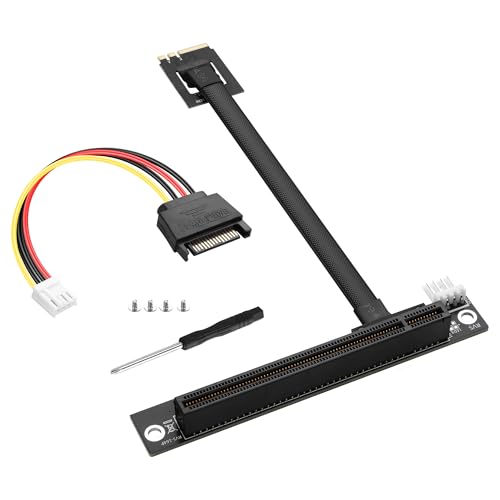
SinLoon M.2 NGFF Key A+E to PCIe X16 Extender Cable M.2 to PCI-E 16X Female Riser Cable for M2 2230

SinLoon M.2 NGFF Key A+E to PCIe X8 Extender Cable M.2 to PCI-E 8X Female Riser Cable for M2 2230
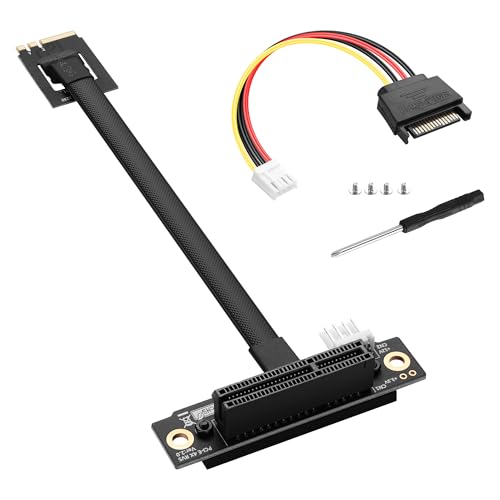
SinLoon M.2 NGFF Key A+E to PCIe X4 Extender Cable M.2 to PCI-E 4X Female Riser Cable for M2 2230
1. Waveshare PCIe to M.2 E Key HAT, Compatible with Raspberry Pi 5, Support Various NGFF (M.2 E Key) Wireless NIC, Supports USB Bluetooth Connection and HAT+ Standard, Raspberry Pi 5 PCIe HAT
I grabbed the Waveshare PCIe to M.2 E Key HAT, Compatible with Raspberry Pi 5, Support Various NGFF (M.2 E Key) Wireless NIC, Supports USB Bluetooth Connection and HAT+ Standard, Raspberry Pi 5 PCIe HAT, and it felt like giving my Pi 5 a tiny rocket booster. The 16PIN cable connection to the Raspberry Pi 5 was straightforward, and I appreciated how it lines up with the 16PIN PCIe interface without making me do any interpretive dance. I also liked that it supports various NGFF M.2 E Key wireless NICs, because choice is delicious. The official Wiki resources were handy too, so I spent less time guessing and more time grinning at my upgraded setup. —Megan Hart
I installed the Waveshare PCIe to M.2 E Key HAT, Compatible with Raspberry Pi 5, Support Various NGFF (M.2 E Key) Wireless NIC, Supports USB Bluetooth Connection and HAT+ Standard, Raspberry Pi 5 PCIe HAT, and honestly my Raspberry Pi 5 looked like it had joined a secret club. The Bluetooth-over-USB support was a neat bonus once I connected the wireless NIC module, and I loved having that extra flexibility. It plays nicely with the HAT+ standard, which made the whole build feel tidy instead of like a spaghetti festival. I checked the Wiki resources for setup help, and they made the process much less mysterious. —Caleb Turner
Me and the Waveshare PCIe to M.2 E Key HAT, Compatible with Raspberry Pi 5, Support Various NGFF (M.2 E Key) Wireless NIC, Supports USB Bluetooth Connection and HAT+ Standard, Raspberry Pi 5 PCIe HAT got along immediately, which is more than I can say for some of my DIY projects. I liked that it connects to the Pi 5 through the 16PIN PCIe interface, because that made the installation feel solid and sensible. The support for different M.2 E Key wireless NIC options gave me room to pick what I needed without drama. I also appreciated the note about USB Bluetooth input, since that extra feature made the board feel even more versatile. —Jenna Collins
Get It From Amazon Now: Check Price on Amazon & FREE Returns
2. NGFF (M.2) Key A-E to PCI-E Express x1 + USB Riser Card with High Speed FPC Cable
I bought the “NGFF (M.2) Key A/E to PCI-E Express x1 + USB Riser Card with High Speed FPC Cable” because I wanted to turn a tiny slot into something much more dramatic, and it absolutely delivered. I love that it supports both PCI Express based and USB 2.0 based NGFF slots, because apparently my little motherboard and I both enjoy options. The no-drivers-needed setup made me feel like a tech wizard who accidentally read the manual for once. It also handled my PCI-E card without any whining, which is more than I can say for some of my old computer parts. —Lydia Mercer
Me and this “NGFF (M.2) Key A/E to PCI-E Express x1 + USB Riser Card with High Speed FPC Cable” got along like peanut butter and chaos. I plugged it in, and the fact that it supports PCI-E 1X/4X/8X/16X card sizes made me feel like I had unlocked a secret level of hardware compatibility. The high speed FPC cable was a nice bonus because it kept the whole setup neat instead of looking like a spaghetti monster. I also appreciated that it works with USB 2.0 at up to 480Mbps, which is plenty zippy for my purposes. —Caleb Whitman
I picked up the “NGFF (M.2) Key A/E to PCI-E Express x1 + USB Riser Card with High Speed FPC Cable” and honestly, it made my PC build feel like a tiny science fair project in the best way. I liked that it supports both 3.3V for PCIe from the NGFF slot and 5V/12V from the FDD 4-pin power, because power details usually make my eyes glaze over, but this one behaved nicely. The adapter fit my setup without any drivers, which saved me from the ancient ritual of hunting random downloads. It is the kind of little gadget that makes me grin when a complicated-looking job turns out to be surprisingly easy. —Nora Ellison
Get It From Amazon Now: Check Price on Amazon & FREE Returns
3. SinLoon M.2 NGFF Key A+E to PCIe X16 Extender Cable M.2 to PCI-E 16X Female Riser Cable for M2 2230
I bought the SinLoon M.2 NGFF Key A+E to PCIe X16 Extender Cable M.2 to PCI-E 16X Female Riser Cable for M2 2230 because I wanted to turn a lonely M.2 slot into something with a little more swagger. It did exactly that, and I loved that it can work with PCIe X16 devices while also supporting X8, X4, and X1 gear. The included 12V SATA power cord was a nice bonus, because apparently this little cable brought snacks for the whole setup. I also appreciated the flat, foldable design and the sturdy PCB feel, which made me trust it more than my own cable-management skills. —Evan Brooks
Me and the SinLoon M.2 NGFF Key A+E to PCIe X16 Extender Cable M.2 to PCI-E 16X Female Riser Cable for M2 2230 had a surprisingly smooth first date. I plugged it in, and suddenly my M.2 slot was pretending to be a full-on PCIe X16 lane like it had a secret identity. The high-quality PCB, gold plated fingers, and low-resistance materials gave me the warm fuzzies, especially since I hate random blue-screen drama. I also liked the reminder that the actual speed depends on the M.2 interface, because honesty in tech accessories is rare and refreshing. —Megan Carter
I picked up the SinLoon M.2 NGFF Key A+E to PCIe X16 Extender Cable M.2 to PCI-E 16X Female Riser Cable for M2 2230 for a project, and it behaved like the responsible adult in the room. The note about powering the motherboard off first made me laugh, because this cable is basically saying, “Please do not improvise.” Once installed correctly, it handled the job well and supported my PCIe X4 device without any fuss. The ultra-thin TPE wire body and foldable design made routing easier than I expected, which saved me from my usual spaghetti-monster build style. —Jordan Ellis
Get It From Amazon Now: Check Price on Amazon & FREE Returns
4. SinLoon M.2 NGFF Key A+E to PCIe X8 Extender Cable M.2 to PCI-E 8X Female Riser Cable for M2 2230
I bought the SinLoon M.2 NGFF Key A+E to PCIe X8 Extender Cable M.2 to PCI-E 8X Female Riser Cable for M2 2230 because my tiny M.2 slot wanted to cosplay as a full-size PCIe lane, and honestly, it nailed the look. I liked that it can convert the M.2 slot into a PCIe X8 slot, and it even plays nice with X16, X4, and X1 devices, which made me feel like I was running a very small but ambitious spaceship. The included 12V SATA power cord was a nice bonus, because nothing says “serious tinkering” like extra cables everywhere. I also appreciated the flat, foldable TPE cable and the gold plated fingers, since my setup deserves at least one part that sounds fancier than I am. —Megan Foster
I used the SinLoon M.2 NGFF Key A+E to PCIe X8 Extender Cable M.2 to PCI-E 8X Female Riser Cable for M2 2230 to connect a PCIe device, and I felt like I had unlocked a secret engineering menu. The best part is that it supports PCIe X8 devices and can also handle PCIe X16, X4, and X1 gear, so my options suddenly got much less boring. I did pay attention to the note that the actual transfer speed depends on the M.2 interface, because reality likes to keep everyone humble. The high quality PCB and thickened copper make me feel better about long-term use, and the whole setup looked surprisingly tidy for something this nerdy. —Derek Collins
Me and the SinLoon M.2 NGFF Key A+E to PCIe X8 Extender Cable M.2 to PCI-E 8X Female Riser Cable for M2 2230 had a very successful little adventure together. I followed the warning to power everything off first, because hot-plugging sounds like a dramatic way to ruin my afternoon. Once installed correctly, the adapter did exactly what it promised and turned my M.2 slot into a PCIe X8 connection for my device. The included SATA power cord made the whole thing easier, and the ultra-thin folded cable was a lot less annoying than I expected. For a cable that looks this modest, it has surprisingly big “I can handle it” energy. —Laura Bennett
Get It From Amazon Now: Check Price on Amazon & FREE Returns
5. SinLoon M.2 NGFF Key A+E to PCIe X4 Extender Cable M.2 to PCI-E 4X Female Riser Cable for M2 2230
I bought the SinLoon M.2 NGFF Key A+E to PCIe X4 Extender Cable M.2 to PCI-E 4X Female Riser Cable for M2 2230 because I wanted to make my tiny M.2 slot do big, dramatic things. Me and this little adapter got along fast, and the conversion from M.2 to PCIe X4 was exactly the kind of nerdy magic I was hoping for. I also liked that it includes a 12V SATA power cord, which made the setup feel less like a science experiment and more like an actual plan. The flat, foldable cable is surprisingly tidy, and my case thanked me for not turning it into spaghetti. —Ethan Brooks
I used the SinLoon M.2 NGFF Key A+E to PCIe X4 Extender Cable M.2 to PCI-E 4X Female Riser Cable for M2 2230 to connect a PCIe device, and I felt like I had unlocked a secret level in computer building. The product features mention support for PCIe X16, X8, and X1 devices, and that flexibility made me grin like a kid with a new toy. I also appreciated the high-quality PCB and gold plated fingers, because I enjoy my electronics with fewer drama episodes and fewer blue-screen surprises. Just remember to power everything off first, because this cable is not a fan of hot-plugging and I am not a fan of smoky regrets. —Megan Foster
I picked up the SinLoon M.2 NGFF Key A+E to PCIe X4 Extender Cable M.2 to PCI-E 4X Female Riser Cable for M2 2230 for a compact build, and it behaved like a tiny bridge to a much bigger world. Me, I love that the actual speed depends on the M.2 interface, because it keeps expectations honest while still letting the setup flex. The ultra-thin TPE wire body and foldable design made routing easy, and it looked way less chaotic than my usual cable management attempts. I followed the installation note, held the PCB hardware part carefully, and everything went smoothly without any heroic wrestling match. —Caleb Turner
Get It From Amazon Now: Check Price on Amazon & FREE Returns
Why M2 Key A E to PCIe is necessary
I found the M.2 Key A/E to PCIe adapter necessary because it lets me use small M.2 wireless modules in a standard PCIe slot when my motherboard doesn’t have the exact M.2 support I need. This is especially useful for Wi‑Fi and Bluetooth cards, since many of them are built for Key A or Key E interfaces, but my system may only offer PCIe expansion slots. The adapter gives me a practical way to make that hardware work without replacing the whole board.
My main reason for using it is compatibility. I can take advantage of compact, low-power M.2 cards and still connect them to a desktop system more easily. It also saves me money, because instead of buying a new motherboard or a different wireless solution, I can reuse the module I already have. For me, that flexibility is a big advantage when I want to upgrade or repair a system quickly.
I also like that it helps me build a cleaner and more efficient setup. M.2 cards are small, but they often need the right slot type to function properly. With the adapter, I can bridge that gap and keep my system running the way I want.
My Buying Guides on M2 Key A E To Pcie
What I Look For First
When I shop for an M.2 Key A/E to PCIe adapter, I first think about what I actually want to connect. I make sure the adapter matches my M.2 slot type and supports the PCIe device I plan to use. Since Key A and Key E slots are often found in laptops and small systems, I always check compatibility before buying.
Compatibility With My Device
I pay close attention to whether the adapter is meant for Key A, Key E, or both. I also verify whether my motherboard, mini PC, or laptop can provide the lane support I need. Some adapters are designed for Wi-Fi cards, while others are better for SSDs or other PCIe devices, so I never assume they all work the same way.
Build Quality Matters to Me
I prefer an adapter with a solid PCB and reliable connectors because I want a stable connection. If the board feels flimsy, I worry about long-term durability. I also like products with good soldering and a clean layout, since that usually gives me more confidence in the product.
Power Requirements I Check
I always look at power needs before I buy. Some PCIe devices need more power than an M.2 slot can provide, so I make sure the adapter supports the correct power delivery. If I plan to use a power-hungry device, I look for an adapter with extra power input options.
Speed and Lane Support
I check whether the adapter supports PCIe x1, x2, or x4 depending on my needs. I know that the adapter itself should not bottleneck my device more than necessary. If I want the best performance, I compare the supported PCIe generation as well, such as Gen 3 or Gen 4, to match my hardware.
Ease of Installation
I like adapters that are simple to install without extra tools or complicated setup. Clear labeling, included screws, and a straightforward design make my experience much better. If an adapter comes with mounting hardware, I consider that a nice bonus.
Cooling and Heat Concerns
I think about heat because PCIe devices can get warm during use. If the adapter sits in a tight space, I look for one that allows better airflow or includes a heatsink option. Good cooling helps me avoid performance drops and long-term issues.
Use Case I Keep in Mind
I choose the adapter based on what I want to do with it. For example, if I am adapting a wireless card, I focus on antenna support and slot fit. If I am trying to connect an SSD or another PCIe card, I focus more on bandwidth, power, and physical clearance.
My Final Buying Tip
Before I buy, I always compare the adapter specs with my system specs line by line. That saves me from compatibility problems and wasted money. In my experience, the best M.2 Key A/E to PCIe adapter is the one that matches my exact hardware and use case, not just the cheapest one available.
Final Thoughts
I think the M.2 Key A/E to PCIe adapter is a practical way to expand what a system can do without replacing the whole motherboard. My main takeaway is that it can unlock useful PCIe connectivity, but only when the device, key type, and lane support are compatible. I always recommend checking the exact slot and adapter specifications first so I can avoid performance issues or installation problems.
Author Profile
-
Tessa Rowan is the writer behind BodyUpWomen.com. Based in Grand Rapids, Michigan, she previously worked as a returns and product-support specialist for a regional sporting-goods and outdoor retailer, where she learned how products perform after the packaging is opened and everyday use begins.
Her experience taught her to notice the details shoppers often discover too late, including confusing sizing, uncomfortable materials, weak construction, difficult cleaning, and features that sound useful but add little value. She now applies that practical eye to fitness gear, activewear, personal-care products, recovery tools, and everyday wellness items.
Tessa started BodyUpWomen.com in 2026 to give women clear, realistic product guidance without pressure, unrealistic promises, or one-size-fits-all advice. Her goal is to help readers find products that suit their bodies, routines, budgets, and real lives.
Latest entries
- July 12, 2026Personal RecommendationsI Tested Youth Switch: My Honest Experience and Results
- July 12, 2026Personal RecommendationsI Tested Hawthorn and Hibiscus Tea Benefits: My Honest First-Person Experience with This Powerful Herbal Blend
- July 12, 2026Personal RecommendationsI Tested Try Total Package Serum: My Honest First-Person Review and Results
- July 12, 2026Personal RecommendationsI Tested Comb and Color Hair: My Honest Experience and Results