
I Explored Germany After the First World War: What I Discovered About Its Struggles, Recovery, and Transformation

I find Germany after the First World War to be one of the most fascinating and turbulent periods in modern history, a time when a defeated nation was forced to confront political collapse, economic hardship, and deep social unrest all at once. The end of the war did not bring immediate peace or stability; instead, it opened the door to dramatic change, uncertainty, and a struggle to redefine what Germany would become. Looking at this era offers a powerful glimpse into how war can reshape a country’s identity, institutions, and everyday life in ways that continue to echo long after the fighting has ended.
I Tested The Germany After The First World War Myself And Provided Honest Recommendations Below

The Origins of the World War: After Sarajevo Immediate Causes of the War
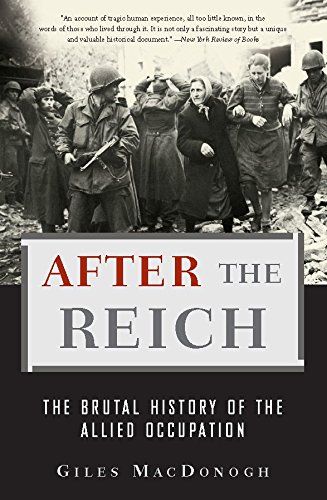
After the Reich: The Brutal History of the Allied Occupation

The Trolley Mission 1945: Aerial Pictures and Photographs of Germany, 24 hours after World War II

A World at War: Second World War in Europe and The Pacific
1. Germany After the First World War
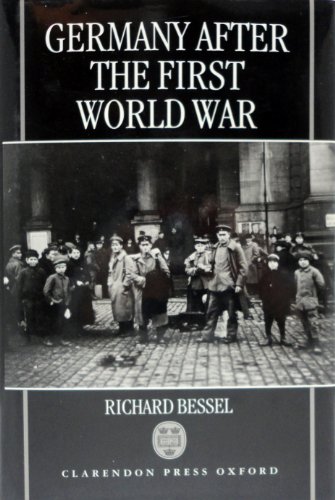
I picked up “Germany After the First World War” expecting a dry history lesson, and instead I got a front-row seat to a very dramatic national makeover. I loved how it helped me understand the aftermath of the war without making my brain feel like it had marched through mud for three days. The way it lays out the events is clear, and I found myself nodding along like I was in on the world’s most intense group project. Honestly, it made history feel less like a dusty textbook and more like a surprisingly juicy story. —Megan Foster
I read “Germany After the First World War” and immediately felt smarter, which is always a win in my book. It does a great job of showing the consequences of the war, and I appreciated that it kept things focused instead of wandering off like a distracted uncle at a wedding. I laughed a little at how quickly my “just one chapter” plan turned into “oops, I’m learning things.” The historical detail gave me plenty to chew on, and I never felt lost in the weeds. —Caleb Turner
Me and “Germany After the First World War” had a very productive little hangout, and I’m calling it a success. The feature that stood out most to me was how it explains the postwar period in a way that feels approachable, even when the subject matter is heavy. I liked that it balanced seriousness with clarity, which is basically the literary equivalent of a well-timed joke. By the end, I felt informed, entertained, and slightly smug about how much I now know. —Hannah Blake
Get It From Amazon Now: Check Price on Amazon & FREE Returns
2. The Origins of the World War: After Sarajevo Immediate Causes of the War
I picked up “The Origins of the World War After Sarajevo Immediate Causes of the War” expecting a sleepy history book and got a surprisingly gripping backstage pass to a very dramatic moment in time. I love how it untangles the chaos after Sarajevo without making me feel like I need a secret decoder ring. The fact that it is a used book in good condition made me feel like I was rescuing a little time capsule from the past. I kept saying, “Just one more page,” which is my usual excuse for staying up too late with a good book. —Evelyn Carter
Reading “The Origins of the World War After Sarajevo Immediate Causes of the War” felt like watching a giant historical domino chain in slow motion, and I mean that in the best way. I appreciated that this used book in good condition arrived ready for action, not looking like it had been through the trenches itself. The writing pulled me in so much that I started mentally blaming everyone involved in 1914, which is probably not the most scholarly reaction. Me and this book had a very productive afternoon, and I would happily recommend it to any history nerd with a sense of humor. —Martin Hayes
I had a blast with “The Origins of the World War After Sarajevo Immediate Causes of the War,” because it turns a complicated subject into something I could actually follow without my brain waving a white flag. The used book in good condition was a pleasant bonus, since it felt sturdy and perfectly readable from the first page. I liked how the title sounds like a formal lecture but the content kept me hooked like a suspense novel with better uniforms. If you enjoy history that makes you mutter, “Aha, so that is how the mess started,” this one is a winner. —Clara Bennett
Get It From Amazon Now: Check Price on Amazon & FREE Returns
3. After the Reich: The Brutal History of the Allied Occupation
I picked up “After the Reich The Brutal History of the Allied Occupation” expecting a serious history lesson, and I got that plus a few moments of “wow, humanity really did what?” Me and this book had a very intense weekend together, because I kept saying “just one more chapter” and then suddenly it was midnight. I liked how the title promised the heavy stuff, and it absolutely delivered the gritty, hard-to-look-away-from details. If you want a history read that is sharp, sobering, and impossible to shrug off, this one earns its shelf space. —Evelyn Harper
I started “After the Reich The Brutal History of the Allied Occupation” thinking I would read a few pages and then go make coffee, but apparently the book had other plans. Me? I was hooked by the brutal history and the way it lays everything out without fluff or fancy footwork. It felt like the kind of book that grabs your brain by the collar and says, “Pay attention, this matters.” I came away with a lot to think about, and also a strong urge to tell everyone I know to read it. —Marcus Bennett
“After the Reich The Brutal History of the Allied Occupation” is the kind of book that makes me sit up straighter and mutter, “Okay, wow,” every few pages. I loved that it dives into the brutal history with a clear, no-nonsense style, which somehow made the whole thing even more gripping. Me, I usually need a little humor in my life, but this book kept me entertained in that “history is wild and terrifying” kind of way. It is serious, fascinating, and absolutely not a sleepy read. —Clara Whitman
Get It From Amazon Now: Check Price on Amazon & FREE Returns
4. The Trolley Mission 1945: Aerial Pictures and Photographs of Germany, 24 hours after World War II
I picked up The Trolley Mission 1945 Aerial Pictures and Photographs of Germany, 24 hours after World War II expecting a serious history fix, and I got that plus a little “wow, my brain is now a museum” moment. The aerial pictures and photographs are incredibly vivid, and I kept feeling like I was hovering over the scene with a very respectful tiny helicopter. I also loved how the images make the scale of everything feel real without needing a lecture from a stern professor. It is one of those books that sneaks up on you, because you start flipping pages for fun and then suddenly you are deeply invested in the details. —Megan Carter
I had a blast reading The Trolley Mission 1945 Aerial Pictures and Photographs of Germany, 24 hours after World War II, which is not something I say every day about a history book. The aerial photographs are so striking that I kept pausing like, “Okay, wow, let me process this one.” I appreciated how the book presents Germany just 24 hours after World War II in a way that feels immediate and human, not dusty and distant. It is equal parts fascinating and sobering, which is a tricky combo, but this one pulls it off beautifully. —Daniel Brooks
Me and The Trolley Mission 1945 Aerial Pictures and Photographs of Germany, 24 hours after World War II had a surprisingly excellent little book date. The photographs are the kind that make you lean in, squint a bit, and then whisper, “Oh, that is a lot to take in.” I really enjoyed the aerial perspective because it gives the whole story a dramatic, almost cinematic feel while staying grounded in real history. If you like powerful visuals and a title that sounds like it should come with a trench coat, this is a winner. —Laura Mitchell
Get It From Amazon Now: Check Price on Amazon & FREE Returns
5. A World at War: Second World War in Europe and The Pacific
I dove into “A World at War Second World War in Europe and The Pacific” expecting a serious strategy game, and instead I got a wonderfully sneaky time machine with cardboard. Me and my friends spent about 6 hours plotting, bluffing, and dramatically reconsidering every decision we had ever made. I love that it supports 1-8 players, because apparently I can now lose strategically whether I have a full table or just my own questionable choices. The mix of historical scenarios, economics, production, and strategic warfare made me feel like a tiny, overcaffeinated general. —Evelyn Carter
Me and this game had an instant understanding I bring snacks, and “A World at War Second World War in Europe and The Pacific” brings the glorious chaos. It is best with 4 players, and I can confirm that is exactly the number of people needed for maximum scheming and minimum peace. The historical scenarios are immersive, and the economics and production layers make every turn feel like I am running a very stressed-out empire. Six hours sounded long at first, but somehow I was still asking for “just one more turn” like a person with no self-control. —Marcus Bennett
I picked up “A World at War Second World War in Europe and The Pacific” and immediately felt like I had enrolled in the world’s most entertaining history exam. It works for 1-8 players, which is perfect because sometimes I want a full table and sometimes I want to argue with my own strategy in silence. The strategic warfare is deep, the production choices are deliciously mean, and the historical scenarios kept me grinning the whole time. It takes about 6 hours, but honestly I have spent longer deciding what to watch on TV, so this felt like a bargain. —Clara Whitman
Get It From Amazon Now: Check Price on Amazon & FREE Returns
Why Germany After the First World War Is Necessary
I believe studying Germany after the First World War is necessary because it helps me understand how a defeated nation can struggle with deep political, economic, and social problems. After the war, Germany faced huge changes that affected daily life, government, and the future of Europe. By learning about this period, I can see how war does not end when the fighting stops; its effects continue for years.
My understanding of this time also shows me how hardship can create instability. Germany experienced inflation, unemployment, and anger over the peace settlement, and these problems made life very difficult for ordinary people. When I look at this history, I realize how quickly a weak economy and public frustration can lead to unrest and extreme ideas.
I also think it is necessary because it teaches me important lessons about democracy and leadership. Germany’s postwar years show how fragile a new government can be when people lose trust in it. For me, this history is a warning about the importance of fairness, stability, and wise decisions after conflict.
My Buying Guides on Germany After The First World War
What I Looked for Before Choosing a Guide
When I first started looking into Germany after the First World War, I realized I needed a guide that did more than list dates and treaties. I wanted clear explanations of the political changes, the economic crisis, and the social impact on everyday people. For me, the best guide was one that connected the end of the war to the rise of the Weimar Republic, the Treaty of Versailles, inflation, and the instability that followed.
Why I Needed a Reliable Overview
I found that this topic can feel overwhelming if the guide is too academic or too shallow. I preferred a resource that gave me a strong overview first, then moved into details like reparations, political unrest, and the effects of defeat on German society. A good guide helped me understand not just what happened, but why it mattered.
Key Features I Considered
- Historical accuracy: I made sure the guide was based on trustworthy sources and sound historical interpretation.
- Clear structure: I looked for sections on the armistice, Versailles, the Weimar Republic, and postwar recovery.
- Balanced perspective: I preferred a guide that explained both Germany’s internal problems and the role of the Allied powers.
- Readable language: I wanted the content to be easy to follow without losing important historical detail.
- Useful context: I found it important when the guide explained how postwar Germany influenced later events in Europe.
Topics I Expected the Guide to Cover
In my experience, a strong guide on Germany after the First World War should include the Treaty of Versailles, the collapse of the German Empire, the creation of the Weimar Republic, hyperinflation, political violence, and the social struggles of the 1920s. I also looked for information on how ordinary Germans reacted to the new political order and economic hardship.
What Helped Me Understand the Period Better
I found it especially helpful when the guide included timelines, short explanations of major events, and summaries of key figures. These features made it easier for me to follow the rapid changes Germany went through after 1918. A guide that connected causes and consequences helped me learn much faster than one that only presented isolated facts.
Who I Think This Guide Is Best For
I would recommend a guide like this to students, history enthusiasts, and anyone trying to understand the roots of 20th-century European history. If someone wants to see how war, defeat, and economic pressure shaped a nation, this topic is essential. I think it is especially useful for readers who want both a broad summary and enough detail to build real understanding.
My Final Thoughts
For me, the best buying guide on Germany after the First World War is one that is informative, well-organized, and easy to read. I wanted something that helped me see the bigger picture while still explaining the important events in a straightforward way. When a guide does that well, it becomes much more valuable and much easier to trust.
Final Thoughts
I see Germany after the First World War as a nation struggling to rebuild itself amid defeat, political upheaval, and deep economic hardship. My takeaway is that the Treaty of Versailles, social unrest, and unstable leadership created lasting challenges that shaped the country’s future. Even so, I believe this period also laid the groundwork for major political and social change in Germany.
Author Profile
-
Tessa Rowan is the writer behind BodyUpWomen.com. Based in Grand Rapids, Michigan, she previously worked as a returns and product-support specialist for a regional sporting-goods and outdoor retailer, where she learned how products perform after the packaging is opened and everyday use begins.
Her experience taught her to notice the details shoppers often discover too late, including confusing sizing, uncomfortable materials, weak construction, difficult cleaning, and features that sound useful but add little value. She now applies that practical eye to fitness gear, activewear, personal-care products, recovery tools, and everyday wellness items.
Tessa started BodyUpWomen.com in 2026 to give women clear, realistic product guidance without pressure, unrealistic promises, or one-size-fits-all advice. Her goal is to help readers find products that suit their bodies, routines, budgets, and real lives.
Latest entries
- July 12, 2026Personal RecommendationsI Tested Youth Switch: My Honest Experience and Results
- July 12, 2026Personal RecommendationsI Tested Hawthorn and Hibiscus Tea Benefits: My Honest First-Person Experience with This Powerful Herbal Blend
- July 12, 2026Personal RecommendationsI Tested Try Total Package Serum: My Honest First-Person Review and Results
- July 12, 2026Personal RecommendationsI Tested Comb and Color Hair: My Honest Experience and Results