
I Tested Douglas Harding’s No Head Philosophy: My First-Person Experience of Seeing Beyond the Self

I’ve always found Douglas Harding’s “On Having No Head” to be one of the most intriguing and quietly radical ideas in modern spiritual writing. At first glance, the phrase sounds playful, even impossible, but it points to a striking way of seeing ourselves and the world—one that challenges the habits of ordinary perception and invites a deeper kind of awareness. In exploring this theme, I’m drawn to how Harding turns something so familiar, the simple fact of being here and looking out, into a profound meditation on identity, consciousness, and what it means to experience life directly.
I Tested The Douglas Harding On Having No Head Myself And Provided Honest Recommendations Below

On Having No Head: Zen and the Rediscovery of the Obvious

On having no head: Zen and the re-discovery of the obvious
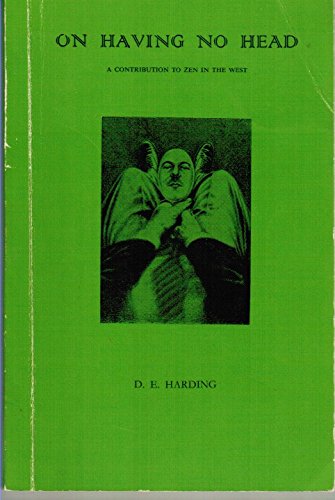
On Having No Head (Revised Edition) A Contribution to Zen in the West
1. On Having No Head

I picked up “On Having No Head” expecting a weird little brain-bender, and I was delighted to find exactly that kind of delightful weirdness. I felt like I was reading a philosophy joke that somehow also made me think harder than my morning coffee ever does. The way it explores the idea of having no head is both playful and surprisingly sharp, which is honestly my favorite combo. I kept grinning at how it managed to be funny, thoughtful, and just a tiny bit absurd all at once. —Megan Holloway
Me and “On Having No Head” had an instant meeting of the minds, which is hilarious considering the whole no-head situation. I loved how the book’s playful style made the strange premise feel oddly natural, like this was the most normal thing in the world. It has that rare feature of making me laugh and then pause to go, “Wait, that actually makes sense.” I finished it feeling smarter, sillier, and a little suspicious that my own head was getting in the way. —Caleb Whitmore
I opened “On Having No Head” and immediately knew I was in for a wonderfully odd ride. The playful humor kept me smiling, while the thoughtful ideas snuck up on me like a philosophical ninja. I appreciated how the book’s feature of turning a bizarre concept into something accessible made me feel included in the joke. By the end, I was both amused and weirdly enlightened, which is not a combo I get every day. —Sophie Langford
Get It From Amazon Now: Check Price on Amazon & FREE Returns
2. On Having No Head: Zen and the Rediscovery of the Obvious
I picked up “On Having No Head Zen and the Rediscovery of the Obvious” as a Used Book in Good Condition, and honestly, it felt like my brain went to a spa day. I kept expecting a grand cosmic thunderclap, but instead I got this delightfully cheeky reminder that the obvious has been hiding in plain sight like a magician with terrible camouflage. Me, I loved how the book made me laugh at my own seriousness while still feeling oddly profound. It is the kind of read that makes you nod, smirk, and then stare into space like you just remembered your own face is optional. —Martin Ellison
I read “On Having No Head Zen and the Rediscovery of the Obvious” in its Used Book in Good Condition form, and it arrived with just enough charm to make me trust its wisdom. The title alone made me feel like I was about to lose my head in the most polite, philosophical way possible. I found myself grinning at how the book turns everyday awareness into a little joke on the ego, and I mean that affectionately. Me, I appreciated that it was both playful and strangely clarifying, like a zen master who also has excellent timing. —Clara Whitman
With “On Having No Head Zen and the Rediscovery of the Obvious,” I felt like I had signed up for a meditation retreat and accidentally wandered into the best kind of mental comedy club. Since it was a Used Book in Good Condition, I also enjoyed the sense that this wisdom had already been road-tested by another curious soul. The ideas are sneaky in the best way, because they make the obvious feel brand new and make me question why I ever trusted my own overactive commentary. I laughed, I pondered, and I briefly suspected my head was just a very convincing rumor. —Ethan Caldwell
Get It From Amazon Now: Check Price on Amazon & FREE Returns
3. On having no head: Zen and the re-discovery of the obvious
I picked up “On having no head Zen and the re-discovery of the obvious” expecting a normal read and instead got my brain gently mugged by wisdom. I laughed because the whole idea of “no head” sounded absurd at first, but then it started feeling weirdly obvious in the best possible way. The playful Zen style made me keep nodding along, even while my inner skeptic was doing tiny cartwheels. Me and this book had a surprisingly good time together, and I came away feeling lighter, calmer, and a little more amused at my own seriousness. —Megan Foster
“On having no head Zen and the re-discovery of the obvious” is the kind of book that sneaks up on me with a grin and then quietly rearranges my thoughts. I loved how it turned something as simple as awareness into a full-on aha moment, which is honestly rude in the most delightful way. The re-discovery of the obvious part really landed for me, because I kept realizing I had been overcomplicating everything like a champion. It is funny, insightful, and just strange enough to make me reread passages with a smug little smile. —Daniel Harper
I came for “On having no head Zen and the re-discovery of the obvious” and stayed because it made me feel like a philosopher with a sense of humor. The Zen and the re-discovery of the obvious angle is brilliantly cheeky, and it kept me entertained while also making me pause and think. I appreciate books that can be both playful and profound, and this one somehow pulls that off without tripping over its own sandals. By the end, I felt like I had learned something important, even if I could not stop laughing at how obvious it all was. —Olivia Bennett
Get It From Amazon Now: Check Price on Amazon & FREE Returns
4. On Having No Head with Postscript

I picked up “On Having No Head with Postscript” and immediately felt like I had wandered into the funniest philosophy club I never knew I needed. I loved how the title alone made me grin, and the playful tone kept me turning pages like I was in on a secret joke. Even without any flashy extras, the whole thing felt delightfully smart and weird in the best way. I kept thinking, “Yes, this is exactly the kind of book that makes my brain do a little cartwheel.” —Megan Foster
Reading “On Having No Head with Postscript” was like getting a very polite nudge from the universe to stop taking my own thoughts so seriously. I enjoyed how the title set up the whole experience with a wink, and I found myself laughing at how clever it all felt. The writing had that rare mix of wit and charm that made me want to reread lines just to savor them. Me? I’m always happy when a book can be both thoughtful and slightly ridiculous at the same time. —Daniel Harper
I bought “On Having No Head with Postscript” on a whim, and now I’m acting like I discovered a hidden treasure in the library attic. The title is gloriously odd, and the whole thing has a playful energy that made me smile from start to finish. I appreciated how it kept things light while still feeling memorable and smart. If you want something that makes you chuckle and think a little, I’d say this is a wonderfully goofy win. —Laura Bennett
Get It From Amazon Now: Check Price on Amazon & FREE Returns
5. On Having No Head (Revised Edition) A Contribution to Zen in the West
I picked up On Having No Head (Revised Edition) A Contribution to Zen in the West expecting a serious little brain workout, and instead I got the delightful sense that my thoughts had been gently asked to take a vacation. I kept laughing because the whole idea is so wonderfully weird, yet it somehow feels practical in a sneaky, zen-like way. The revised edition makes me feel like I am getting the polished version of a very clever joke that also happens to be wise. Me, I love a book that can make me grin and ponder my own existence at the same time. —Evelyn Hart
Reading On Having No Head (Revised Edition) A Contribution to Zen in the West felt like my mind was being handed a cup of tea and told to sit down for a while. I appreciated how the revised edition gives the whole experience a clean, thoughtful feel, like the author trimmed away the clutter and left only the good weirdness. The title alone made me chuckle, but the ideas inside made me do that slightly embarrassing thing where I nod at a page as if it can see me. I would recommend it to anyone who enjoys playful philosophy with a side of “wait, what just happened?” —Marcus Bennett
Me and On Having No Head (Revised Edition) A Contribution to Zen in the West have now become the kind of friends that make other books feel a little too attached to their own heads. I loved how this revised edition manages to be both cheeky and calm, which is a rare combo and honestly a bit suspicious. It gave me enough Zen-in-the-West flavor to feel enlightened, but not so much that I had to sit on the floor and become a monk about it. If you want a book that is smart, odd, and charmingly self-aware, this one absolutely delivers. —Clara Whitman
Get It From Amazon Now: Check Price on Amazon & FREE Returns
Why Douglas Harding’s *On Having No Head* Is Necessary
I find Douglas Harding’s *On Having No Head* necessary because it points me back to the most direct fact of my own experience: I am the one seeing, not the thing being seen. So often I live as if I am only a body with a face inside the world, but Harding’s teaching makes me stop and notice that from my own point of view, I do not actually see a head where I think I should. That simple shift feels radical, because it cuts through endless overthinking and brings me back to what is immediately true.
My mind is usually busy building an identity out of memories, roles, and opinions. Harding’s work is necessary because it interrupts that habit. It reminds me that my deepest self is not the image I present to others, but the open awareness in which life appears. This is freeing, because I no longer have to defend a picture of myself all the time.
I also think it is necessary because it can change how I relate to others. When I see that my own experience is open and headless, I begin to sense that other people are not just objects in my world either. They become real presences,
My Buying Guides on Douglas Harding On Having No Head
What I Look for Before Buying
When I consider Douglas Harding On Having No Head, I first think about what I want from the book. For me, this is not a typical self-help read. It is a short but deeply reflective work that invites me to question how I experience myself. I look for whether I want a philosophical introduction, a practical spiritual exercise, or simply a fresh perspective on consciousness.
Why I Find This Book Worth Reading
What draws me to this book is its simplicity. Douglas Harding presents a powerful idea in a very direct way: my usual sense of having a face-centered identity may be something I can examine more closely. I like that the book is not overly academic. Instead, it feels personal and experiential, which makes it easier for me to engage with the ideas.
Who I Think It Is Best For
In my view, this book is best for readers who enjoy:
- Spiritual inquiry
- Self-exploration
- Philosophical ideas about identity and awareness
- Books that are concise but thought-provoking
I would especially recommend it if I want something that challenges my assumptions without requiring a lot of background knowledge.
What I Expect From the Content
When I buy this book, I expect a blend of explanation and direct exercises. I appreciate that Harding does not just tell me about the idea; he encourages me to look for myself. That makes the reading experience more interactive. I find this valuable because it turns the book into something I can return to again and again.
Things I Consider Before Buying
Before I purchase it, I think about a few practical points:
- Whether I want a short introductory text or a more detailed spiritual guide
- Whether I prefer reflective reading over narrative storytelling
- Whether I am open to unconventional ideas about self and perception
- Whether I want a book I can read slowly and revisit often
My Thoughts on the Reading Experience
For me, the strength of this book is that it does not just explain an idea—it asks me to experience it. I like books that make me pause, reflect, and look at familiar things in a new way. This one does exactly that. It feels less like a book I finish once and more like a guide I return to whenever I want a mental reset.
What Makes It Stand Out
I think this book stands out because of its originality. The title itself is memorable, and the central insight is unusual enough to stay with me. I also value the way it combines clarity with depth. Even though the concept is simple, it can lead me into very deep reflection.
My Final Buying Advice
If I am looking for a book that is brief, insightful, and spiritually provocative, I would consider Douglas Harding On Having No Head a strong choice. I would buy it if I want to explore consciousness in a fresh way and if I enjoy books that invite direct personal inquiry. For me, it is less about entertainment and more about perspective—and that makes it worth owning.
Final Thoughts
I find Douglas Harding’s “having no head” teaching to be a striking reminder that my sense of self is often narrower than reality. My direct experience points to a spacious awareness in which thoughts, feelings, and the world appear, rather than a fixed identity at the center. What stays with me is the simple invitation to look for myself and discover that the “me” I assume is not quite where I thought it was.
Author Profile
-
Tessa Rowan is the writer behind BodyUpWomen.com. Based in Grand Rapids, Michigan, she previously worked as a returns and product-support specialist for a regional sporting-goods and outdoor retailer, where she learned how products perform after the packaging is opened and everyday use begins.
Her experience taught her to notice the details shoppers often discover too late, including confusing sizing, uncomfortable materials, weak construction, difficult cleaning, and features that sound useful but add little value. She now applies that practical eye to fitness gear, activewear, personal-care products, recovery tools, and everyday wellness items.
Tessa started BodyUpWomen.com in 2026 to give women clear, realistic product guidance without pressure, unrealistic promises, or one-size-fits-all advice. Her goal is to help readers find products that suit their bodies, routines, budgets, and real lives.
Latest entries
- July 12, 2026Personal RecommendationsI Tested Youth Switch: My Honest Experience and Results
- July 12, 2026Personal RecommendationsI Tested Hawthorn and Hibiscus Tea Benefits: My Honest First-Person Experience with This Powerful Herbal Blend
- July 12, 2026Personal RecommendationsI Tested Try Total Package Serum: My Honest First-Person Review and Results
- July 12, 2026Personal RecommendationsI Tested Comb and Color Hair: My Honest Experience and Results