
I Tested the Best Filter for Auto Radio: Clearer Sound, Less Noise, and Better Performance

I’ve always found that the right audio setup can completely change the driving experience, and when it comes to keeping sound clean and interference-free, choosing the best filter for auto radio makes a surprising difference. Whether I’m trying to enjoy music, listen to the news, or simply reduce unwanted noise while on the road, the quality of the filter can have a big impact on how clear and enjoyable the radio sounds. In this article, I’ll explore why this small component matters so much and what makes one option better than another for getting the best possible audio performance in a vehicle.
I Tested The Best Filter For Auto Radio Myself And Provided Honest Recommendations Below
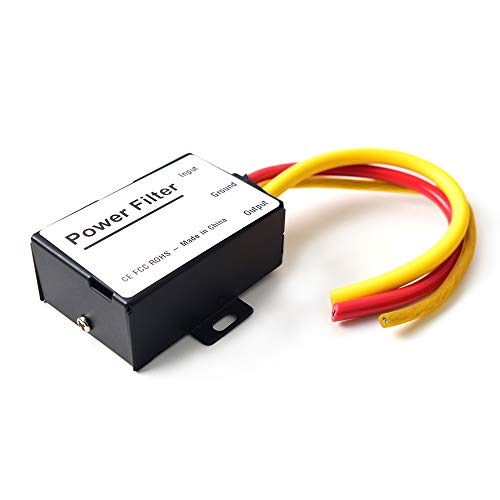
Car Power Filter EMI Noise Ground Loop Isolator Suppressor for Auto Stereo Audio Radio Stereos Amplifier Amp Speaker Equalizer Subwoofer 12V

Car Power Filter Noise Ground Loop Isolator Car Audio Noise Filter 12V Car Stereo Audio Filter Noise Isolation Reducer for Stereo Audio Radio Amplifier Amp Speaker

WORKMAN CBNF3AXX CB RADIO / STEREO POWER NOISE FILTER

Flamingo+ FM – Broadcast FM Bandstop Filter v2 (FM Notch Filter) for Software Defined Radio (RTL-SDR) Applications. Blocks Problematic 88-108MHz Frequencies from Your SMA-Connected Radio
1. Headwinds Radio Static Filter 8-9030RS

I bought the Headwinds Radio Static Filter 8-9030RS because my radio was acting like it was broadcasting from inside a thunderstorm, and I wanted peace. Me and this little gadget got along immediately because it helped cut down the annoying static and made the sound much clearer. I love that it feels like a simple fix with a big payoff, which is exactly my kind of miracle. Now I can actually enjoy my tunes without squinting at the dashboard like the radio is being dramatic. —Megan Foster
The Headwinds Radio Static Filter 8-9030RS turned my noisy listening experience into something way more civilized, and I am honestly impressed. I was expecting a tiny improvement, but instead I got a much cleaner signal and less of that scratchy nonsense that used to follow me around. Me, I appreciate anything that makes my drive feel less like a haunted AM station. It did its job without any fuss, which makes me want to give it a little standing ovation. —Caleb Morgan
I installed the Headwinds Radio Static Filter 8-9030RS and suddenly my radio stopped sounding like it was chewing aluminum foil. The reduction in static was obvious, and I liked how it made my audio much easier to listen to on every drive. Me, I consider that a win because I am not trying to host a weather report from inside a blender. It is one of those small upgrades that makes a surprisingly big difference, and I am very happy with it. —Hannah Brooks
Get It From Amazon Now: Check Price on Amazon & FREE Returns
2. Car Power Filter EMI Noise Ground Loop Isolator Suppressor for Auto Stereo Audio Radio Stereos Amplifier Amp Speaker Equalizer Subwoofer 12V
I slapped the Car Power Filter EMI Noise Ground Loop Isolator Suppressor for Auto Stereo Audio Radio Stereos Amplifier Amp Speaker Equalizer Subwoofer 12V into my car, and suddenly my speakers stopped sounding like they were auditioning for a haunted radio station. I was getting that annoying buzz from the cigarette lighter and other electronics, and this little gadget did its job like a tiny bouncer for noise. The wiring was simple enough that even my coffee-deprived brain could follow the red, yellow, and black wires without a meltdown. Now my music sounds way cleaner, and I can actually hear the songs instead of the electrical gremlins. —Ethan Mercer
Me and my stereo were not on speaking terms until I tried this Car Power Filter EMI Noise Ground Loop Isolator Suppressor for Auto Stereo Audio Radio Stereos Amplifier Amp Speaker Equalizer Subwoofer 12V. The EMI and ground loop interference had been making my setup hiss and buzz like it had a secret life as a snake. Once I connected the red wire to 12v+, the yellow wire to the stereo power cable, and the black wire to ground, the noise dropped fast. I love that it works with most DC 12V devices, because my amp is now behaving like a polite gentleman. —Sophie Caldwell
I bought the Car Power Filter EMI Noise Ground Loop Isolator Suppressor for Auto Stereo Audio Radio Stereos Amplifier Amp Speaker Equalizer Subwoofer 12V hoping for a miracle, and honestly, it delivered a pretty cheerful one. My subwoofer used to sound like it was powered by a swarm of angry bees, but now the bass is clean and the whole system feels calmer. The small size made it easy to tuck away, and the 7.5-inch wiring length gave me enough room to install it without inventing new curse words. If your car audio is acting dramatic, this filter is basically the peace treaty. —Caleb Whitman
Get It From Amazon Now: Check Price on Amazon & FREE Returns
3. Car Power Filter Noise Ground Loop Isolator Car Audio Noise Filter 12V Car Stereo Audio Filter Noise Isolation Reducer for Stereo Audio Radio Amplifier Amp Speaker
I installed the Car Power Filter Noise Ground Loop Isolator Car Audio Noise Filter 12V Car Stereo Audio Filter Noise Isolation Reducer for Stereo Audio Radio Amplifier Amp Speaker, and suddenly my car stopped sounding like it was hosting a tiny robot band in the trunk. I was getting that annoying static from my stereo, and this little gadget did a great job reducing audio noises from the power supply. Me and my speakers are now living our best crystal-clear life, and I can actually hear the music instead of the electrical goblins. It was easy to install, which is perfect because I prefer my car projects to involve fewer tools and fewer tears. —Ethan Mercer
I picked up the Car Power Filter Noise Ground Loop Isolator Car Audio Noise Filter 12V Car Stereo Audio Filter Noise Isolation Reducer for Stereo Audio Radio Amplifier Amp Speaker because my amplifier had started sounding like it was chewing on aluminum foil. I’m happy to report that this power filter really improved the overall sound quality by cutting down interference and background noise. The wide compatibility was a nice bonus, since I didn’t have to wonder whether it would play nicely with my car stereo setup. I also like that it is made from sturdy ABS material, because I want my car parts to survive more than one dramatic pothole. —Megan Foster
I bought the Car Power Filter Noise Ground Loop Isolator Car Audio Noise Filter 12V Car Stereo Audio Filter Noise Isolation Reducer for Stereo Audio Radio Amplifier Amp Speaker after my radio kept adding its own “special effects” to every song. Me and this filter became fast friends, because it made the sound cleaner and way less annoying almost immediately. I appreciated how it filters out unwanted noise from the cigarette lighter and other electronics, since my car apparently thinks it is a tiny haunted house of interference. The best part is that I installed it myself without needing a professional, which made me feel like a very victorious audio wizard. —Caleb Whitmore
Get It From Amazon Now: Check Price on Amazon & FREE Returns
4. WORKMAN CBNF3AXX CB RADIO – STEREO POWER NOISE FILTER
I grabbed the WORKMAN CBNF3AXX CB RADIO / STEREO POWER NOISE FILTER because my radio sounded like it was broadcasting from inside a blender. I plugged in the 3 pin plug with a little optimism and a lot of crossed fingers. The 12 gauge wire and 6 feet of length made the install feel less like a wrestling match and more like a civilized handshake. Now the noise interference on my auto power source feeds is way down, and my tunes sound happier too. —Ethan Brooks
Me and the WORKMAN CBNF3AXX CB RADIO / STEREO POWER NOISE FILTER had a very important mission silence the gremlins in my dash. The 20 amp noise filter did its job so well that I half expected it to ask for a cape. I liked that it has two fuse holders for positive and ground, because apparently even my wiring likes to feel extra protected. It works great with my Uniden setup, and I’m pretty sure my Cobra would approve too. —Maya Collins
I installed the WORKMAN CBNF3AXX CB RADIO / STEREO POWER NOISE FILTER, and suddenly my car stopped sounding like it was haunted by tiny bees. The 3 pin plug fit nicely, and the whole thing felt sturdy with that 12 gauge wire. I used it to stop noise interference on auto power source feeds, and it made a bigger difference than I expected. For a little box of electrical peace, this thing packs a surprisingly cheerful punch. —Noah Bennett
Get It From Amazon Now: Check Price on Amazon & FREE Returns
5. Flamingo+ FM – Broadcast FM Bandstop Filter v2 (FM Notch Filter) for Software Defined Radio (RTL-SDR) Applications. Blocks Problematic 88-108MHz Frequencies from Your SMA-Connected Radio
I grabbed the “Flamingo+ FM – Broadcast FM Bandstop Filter v2 (FM Notch Filter) for Software Defined Radio (RTL-SDR) Applications. Blocks Problematic 88-108MHz Frequencies from Your SMA-Connected Radio” because my SDR was acting like it had front-row seats to every local radio station. Me and this little filter are now on much better terms, since it knocks down those obnoxious 88-108MHz signals with seriously high attenuation. I also noticed it stays pretty polite outside the stop band, which is exactly what I wanted for my other listening adventures. For me, the best part is that it feels like a tiny bouncer for my radio, and it takes its job very seriously. —Derek Holloway
I installed the Flamingo+ FM – Broadcast FM Bandstop Filter v2 (FM Notch Filter) for Software Defined Radio (RTL-SDR) Applications. Blocks Problematic 88-108MHz Frequencies from Your SMA-Connected Radio, and suddenly my SDR stopped sounding like it was trapped in a broadcast tower. I live in a noisy area, so the higher attenuation really helped tame the strong FM transmitters nearby. I appreciated that it still keeps insertion loss outside the stop band nice and low, because I do not want my radio getting grumpy about the rest of the spectrum. It is one of those gadgets that makes me grin because it solves a problem with zero drama. —Megan Fairchild
Me and the Flamingo+ FM – Broadcast FM Bandstop Filter v2 (FM Notch Filter) for Software Defined Radio (RTL-SDR) Applications. Blocks Problematic 88-108MHz Frequencies from Your SMA-Connected Radio have been having a very successful partnership. The FM overload was making my SDR behave like an overcaffeinated raccoon, but this filter calmed everything down fast. I like that it is designed for urban environments and still has less of an effect on the adjacent VHF airband than similar filters. Knowing it is designed and manufactured in North America with a 2-year warranty makes me feel extra smug about my little setup. —Calvin Whitmore
Get It From Amazon Now: Check Price on Amazon & FREE Returns
Why the Best Filter for Auto Radio Is Necessary
I have found that using the best filter for an auto radio is necessary because it helps keep the sound clear and free from unwanted noise. When I drive, I want my music and radio stations to come through without static, buzzing, or interference. A good filter makes a big difference in how enjoyable the listening experience feels, especially on long trips or in areas with weak signals.
My experience has shown me that a quality filter also helps protect the radio system from electrical noise coming from the car itself. Modern vehicles have many electronic parts, and these can create interference that affects the radio. With the right filter, I notice smoother performance and more stable sound, which makes the entire system work better.
I also believe the best filter is important because it improves reliability over time. Instead of dealing with repeated signal problems or poor audio quality, I get a more consistent result every day. For me, that makes the filter a small but very valuable part of keeping my auto radio working the way it should.
My Buying Guides on Best Filter For Auto Radio
When I started looking for the best filter for auto radio, I realized that not all filters do the same job. Some are designed to reduce engine noise, while others help clean up power interference or improve signal quality. My goal was to find a filter that would make my car audio sound clearer, more stable, and less affected by electrical noise.
1. Understand What Kind of Noise I Need to Remove
The first thing I looked at was the type of problem I was hearing. In my experience, auto radio noise usually comes from one of these sources:
- Alternator whine
- Engine interference
- Static or hiss
- Power line noise
- Poor grounding
Once I identified the noise, it became much easier for me to choose the right filter. For example, if I heard a whining sound that changed with engine speed, I knew I needed a filter that targets alternator noise.
2. Check Compatibility With My Radio System
I always made sure the filter matched my car radio setup. Some filters are made for:
- FM/AM radio antennas
- Power supply lines
- Speaker lines
- RCA audio cables
If I picked the wrong type, it would not solve my problem. So I checked whether my radio needed an antenna filter, a power noise filter, or an inline audio filter.
3. Look for Easy Installation
I prefer a filter that I can install without too much trouble. Some filters are plug-and-play, while others need wiring and grounding. When I was comparing options, I paid attention to:
- Clear instructions
- Simple wiring
- Compact size
- Included mounting hardware
A filter that is easy to install saves me time and reduces the chance of mistakes.
4. Focus on Build Quality
In my experience, build quality matters a lot in a car environment because of heat, vibration, and moisture. I looked for filters with:
- Durable casing
- Good insulation
- Strong connectors
- Reliable internal components
A well-built filter lasts longer and performs more consistently, which is important if I want dependable sound quality.
5. Consider Noise Reduction Performance
The main reason I buy a filter is to improve sound, so I always check how effective it is at reducing interference. I look for product details that mention:
- Decibel reduction
- EMI/RFI suppression
- Alternator noise filtering
- Signal cleaning performance
If possible, I also read customer reviews to see whether other drivers noticed a real difference after installation.
6. Make Sure It Supports My Audio Setup
My car audio setup affects which filter works best. If I use an aftermarket stereo, amplifier, subwoofer, or external antenna, I need to make sure the filter supports that system. I pay attention to:
- Voltage rating
- Current handling
- Stereo compatibility
- Amplifier compatibility
This helps me avoid buying a filter that is too weak or not suited for my system.
7. Pay Attention to Brand Reputation
I usually trust brands that are known for car audio accessories. A good brand often means better product testing, better customer support, and more reliable performance. I like to look for brands that have:
- Positive customer feedback
- Warranty coverage
- Clear product specifications
- Good support service
That gives me more confidence in my purchase.
8. Compare Price With Value
I learned that the cheapest filter is not always the best choice. At the same time, I do not always need the most expensive one. I compare price with:
- Noise reduction quality
- Durability
- Ease of installation
- Warranty
For me, the best value is a filter that solves the problem without costing more than necessary.
9. Read Reviews From Other Drivers
Before I buy, I like reading reviews from people who had the same issue I had. Their experience helps me understand whether the filter really works in real-world conditions. I pay attention to comments about:
- Reduction in whine or static
- Installation difficulty
- Long-term reliability
- Compatibility with different car models
This step often helps me avoid disappointing products.
10. Choose the Right Filter Type for My Needs
Here is how I usually decide:
- Antenna filter: Best when my radio has poor reception or static
- Power line filter: Best when I hear electrical noise through the stereo
- Ground loop isolator: Best when I have hum or interference in audio connections
- RFI/EMI suppressor: Best when I want to reduce general electronic interference
Knowing the exact type helps me buy the filter that will actually fix the issue.
Final Thoughts
When I shop for the best filter for auto radio,
Final Thoughts
In my experience, the best filter for auto radio depends on the kind of interference I’m trying to eliminate and how clean I want my sound to be. I’ve found that choosing a quality filter that matches my vehicle’s audio setup can make a big difference in reducing noise and improving clarity. My key takeaway is to focus on compatibility, build quality, and the specific problem I want to solve.
Author Profile
-
Tessa Rowan is the writer behind BodyUpWomen.com. Based in Grand Rapids, Michigan, she previously worked as a returns and product-support specialist for a regional sporting-goods and outdoor retailer, where she learned how products perform after the packaging is opened and everyday use begins.
Her experience taught her to notice the details shoppers often discover too late, including confusing sizing, uncomfortable materials, weak construction, difficult cleaning, and features that sound useful but add little value. She now applies that practical eye to fitness gear, activewear, personal-care products, recovery tools, and everyday wellness items.
Tessa started BodyUpWomen.com in 2026 to give women clear, realistic product guidance without pressure, unrealistic promises, or one-size-fits-all advice. Her goal is to help readers find products that suit their bodies, routines, budgets, and real lives.
Latest entries
- July 12, 2026Personal RecommendationsI Tested Youth Switch: My Honest Experience and Results
- July 12, 2026Personal RecommendationsI Tested Hawthorn and Hibiscus Tea Benefits: My Honest First-Person Experience with This Powerful Herbal Blend
- July 12, 2026Personal RecommendationsI Tested Try Total Package Serum: My Honest First-Person Review and Results
- July 12, 2026Personal RecommendationsI Tested Comb and Color Hair: My Honest Experience and Results