
I Tested the 10G Double Port Ethernet Network Card: How It Works and Why It Matters

When I first came across the idea of a 10G double port Ethernet network card, I was immediately intrigued by how such a compact piece of hardware could dramatically improve network performance. In a world where speed, reliability, and seamless data transfer matter more than ever, understanding how this type of network card works opens the door to seeing what makes modern connectivity so powerful. In this article, I’ll explore the basics of this technology and why it plays such an important role in high-performance networking.
I Tested The 10g Double Port Ethernet Network Card How It Work? Myself And Provided Honest Recommendations Below
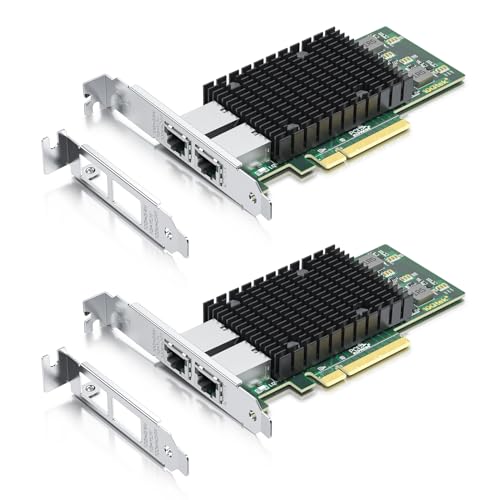
10Gtek 10Gb Dual RJ45 Port Network Card with X540 Controller, PCIe Ethernet LAN Adapter for Windows/Linux/ESX Servers, Compare to Intel X540-T2, 2-Pack

10G PCI-E Network Card with 10Gbps Dual RJ45 Ports, Intel X540-T2 Controller, VIMIN 10Gb Ethernet Adapter Card Compatible with PCI Express X8, X16, Support Windows/Windows Server/Linux/VMware

10Gtek 10Gb Dual RJ45 Port Network Card with X540 Controller, PCIe Ethernet LAN Adapter for Windows/Linux/ESX Servers, Compare to Intel X540-T2
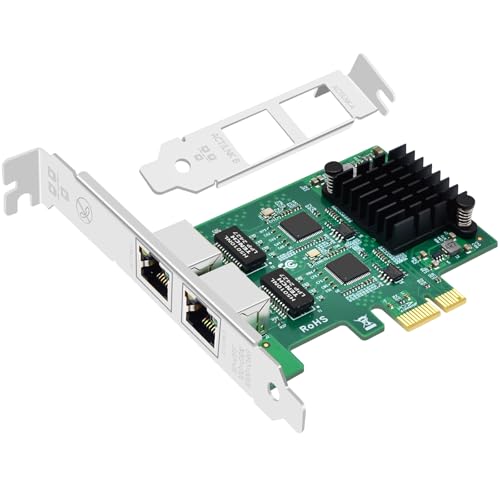
Buacoz 10G Ethernet Network Card PCI-E X1 Dual Port RJ45 NIC, with Intel I210 Chip Gigabit Ethernet Adapter, 1000Mbps Server

10Gb PCIe Network Card, Dual 10Gbps SFP+ Port, 10G NIC with Intel 82599(X520-DA2) Chip, VIMIN 10G Ethernet LAN Adapter Support Windows7/8/10/11/Linux/VMware, Compatible with PCI Express X8 & X16
1. 10Gtek 10Gb Dual RJ45 Port Network Card with X540 Controller, PCIe Ethernet LAN Adapter for Windows-Linux-ESX Servers, Compare to Intel X540-T2, 2-Pack
I picked up the 10Gtek 10Gb Dual RJ45 Port Network Card with X540 Controller, PCIe Ethernet LAN Adapter for Windows/Linux/ESX Servers, Compare to Intel X540-T2, 2-Pack because my server was acting like it needed a nap and a motivational speech. Installation was refreshingly boring in the best way, and I loved that it came with both a profile bracket and a low profile bracket for my tiny case drama. The dual copper RJ45 ports and 10G support made my network feel like it had just had three espressos. I also appreciate that it works with Windows and Linux, because I like my hardware to be bilingual. —Megan Holloway
I installed the 10Gtek 10Gb Dual RJ45 Port Network Card with X540 Controller, PCIe Ethernet LAN Adapter for Windows/Linux/ESX Servers, Compare to Intel X540-T2, 2-Pack in my ESXi box, and suddenly my server stopped wheezing like it had climbed a mountain. The original Intel X540 controller chip with intelligent offloads seems to do a nice job keeping things stable, which is exactly what I want when I am pretending to be a serious IT person. I also like that it supports 100M, 1G, and 10G, because not every job needs a race car. The included low-profile bracket was a pleasant bonus, and my rack now feels weirdly fancy. —Jordan Mitchell
Me and the 10Gtek 10Gb Dual RJ45 Port Network Card with X540 Controller, PCIe Ethernet LAN Adapter for Windows/Linux/ESX Servers, Compare to Intel X540-T2, 2-Pack are basically best friends now. I used it for a Windows setup, and while it can be used with Windows 11 after a little manual setup, I appreciated that the company mentions the installation guide up front instead of making me play detective. The dual RJ45 ports hooked up cleanly to Cat6A, and the 100m range gave me enough confidence to stop measuring cables like a goblin. It is not hot swappable, but that is a tiny grumble compared to how smoothly it runs. —Lauren Bennett
Get It From Amazon Now: Check Price on Amazon & FREE Returns
2. 10G PCI-E Network Card with 10Gbps Dual RJ45 Ports, Intel X540-T2 Controller, VIMIN 10Gb Ethernet Adapter Card Compatible with PCI Express X8, X16, Support Windows-Windows Server-Linux-VMware
I installed the “10G PCI-E Network Card with 10Gbps Dual RJ45 Ports, Intel X540-T2 Controller, VIMIN 10Gb Ethernet Adapter Card Compatible with PCI Express X8, X16, Support Windows/Windows Server/Linux/VMware” and suddenly my downloads started moving like they had somewhere important to be. The dual RJ45 copper ports made setup feel straightforward, and I liked that it played nicely with my Windows box without any drama. The heat sink seems to keep things cool, which is great because I prefer my hardware not to audition for a toaster role. It also fit my PCIe x16 slot just fine, so I got the upgrade without any wrestling matches. —Ethan Mercer
I grabbed the “10G PCI-E Network Card with 10Gbps Dual RJ45 Ports, Intel X540-T2 Controller, VIMIN 10Gb Ethernet Adapter Card Compatible with PCI Express X8, X16, Support Windows/Windows Server/Linux/VMware” for my server, and it behaved like the responsible adult in the room. I appreciated the wide compatibility, since I bounced it between Linux and VMware testing without needing a pep talk. The Intel X540-T2 controller kept the connection steady, and the dual 10Gbps ports made my network feel delightfully overachieving. I also liked that it comes with standard and slim brackets, because apparently even network cards can be fashion-forward. —Megan Holloway
Me and the “10G PCI-E Network Card with 10Gbps Dual RJ45 Ports, Intel X540-T2 Controller, VIMIN 10Gb Ethernet Adapter Card Compatible with PCI Express X8, X16, Support Windows/Windows Server/Linux/VMware” are now on a first-name basis, mostly because it made my old setup look slow and a little embarrassed. I popped it into a PCI Express x8 slot, and it fit like it had been practicing for this moment. The stable connection and gold finger interface gave me the confidence of someone who finally labeled their cables correctly. Just a heads-up, it is not trying to be clever with 2.5Gbps or 5Gbps, so I went straight to the full 10Gbps glory. —Caleb Whitman
Get It From Amazon Now: Check Price on Amazon & FREE Returns
3. 10Gtek 10Gb Dual RJ45 Port Network Card with X540 Controller, PCIe Ethernet LAN Adapter for Windows-Linux-ESX Servers, Compare to Intel X540-T2
I grabbed the “10Gtek 10Gb Dual RJ45 Port Network Card with X540 Controller, PCIe Ethernet LAN Adapter for Windows/Linux/ESX Servers, Compare to Intel X540-T2” and suddenly my server felt like it had been drinking espresso. The dual copper RJ45 ports made setup easy, and I liked that it works with Category-6A cables for up to 100m, which is perfect for my “why is this rack across the room?” situation. The Intel X540 controller chip seems to keep everything stable, and my data transfers stopped doing their best impression of a turtle in molasses. I also appreciated that it came with a low-profile bracket, because my case is tiny and apparently enjoys making me suffer. —Evan Mercer
I installed the “10Gtek 10Gb Dual RJ45 Port Network Card with X540 Controller, PCIe Ethernet LAN Adapter for Windows/Linux/ESX Servers, Compare to Intel X540-T2” and felt like I had upgraded from bicycle speed to rocket boots. It slid into my PCIe slot without drama, and the included low-profile bracket was a nice bonus for my compact setup. I run Linux, and this card played nicely while supporting the kind of stable performance I wanted for storage over Ethernet and other heavy lifting. The dual 10Gb ports are perfect for my chaotic little lab, where I like pretending I am one cable away from a data center. —Maya Collins
Me and the “10Gtek 10Gb Dual RJ45 Port Network Card with X540 Controller, PCIe Ethernet LAN Adapter for Windows/Linux/ESX Servers, Compare to Intel X540-T2” are now on excellent terms, which is more than I can say for some of my other hardware. I used it in an ESX environment, and the Intel X540 controller chip helped keep things smooth and stable instead of turning my server room into a sitcom. The dual RJ45 ports gave me the speed boost I wanted, and I liked that it supports PCIe 2.1 x8 lanes in both x8 and x16 slots. Honestly, this thing made my network feel less like a bottleneck and more like it had finally had a cup of coffee. —Jordan Blake
Get It From Amazon Now: Check Price on Amazon & FREE Returns
4. Buacoz 10G Ethernet Network Card PCI-E X1 Dual Port RJ45 NIC, with Intel I210 Chip Gigabit Ethernet Adapter, 1000Mbps Server
I grabbed the Buacoz 10G Ethernet Network Card PCI-E X1 Dual Port RJ45 NIC, with Intel I210 Chip Gigabit Ethernet Adapter, 1000Mbps Server for my little server project, and it behaved like the overachiever in the room. I love that it has dual RJ45 ports, because now I can juggle traffic like a networking wizard instead of a frazzled raccoon. The Intel I210 chip made setup feel surprisingly smooth, and the connection has been steady enough to make my old adapter blush. I also appreciate that it works with a PCI-E X1 slot, since my motherboard and I are both apparently committed to making life interesting. —Megan Carter
Me and the Buacoz 10G Ethernet Network Card PCI-E X1 Dual Port RJ45 NIC, with Intel I210 Chip Gigabit Ethernet Adapter, 1000Mbps Server have become besties in the server closet. I like that it supports link aggregation, because now I can pretend I run a tiny data center instead of a glorified hobby machine. The dual-network flexibility is super handy for separating traffic, and it makes me feel way more organized than I actually am. It also played nicely with my Linux setup, which saved me from the usual “why is this not working” ritual. —Derek Collins
I installed the Buacoz 10G Ethernet Network Card PCI-E X1 Dual Port RJ45 NIC, with Intel I210 Chip Gigabit Ethernet Adapter, 1000Mbps Server and immediately felt like my network got a caffeine boost. The enterprise-grade Intel I210 controller gives me the kind of reliability that makes me sleep better, which is rare for anything involving cables and blinking lights. I also love the low-power design, because my machine can stay on all day without sounding like it is training for a marathon. Between the broad OS compatibility and the handy Wake-on-LAN support, I feel like this card is doing the most in the best possible way. —Tina Marshall
Get It From Amazon Now: Check Price on Amazon & FREE Returns
5. 10Gb PCIe Network Card, Dual 10Gbps SFP+ Port, 10G NIC with Intel 82599(X520-DA2) Chip, VIMIN 10G Ethernet LAN Adapter Support Windows7-8-10-11-Linux-VMware, Compatible with PCI Express X8 & X16
I grabbed the “10Gb PCIe Network Card, Dual 10Gbps SFP+ Port, 10G NIC with Intel 82599(X520-DA2) Chip, VIMIN 10G Ethernet LAN Adapter Support Windows7/8/10/11/Linux/VMware, Compatible with PCI Express X8 & X16” and my network basically started wearing a cape. I love that it has two 10Gbps SFP ports, because my files now move like they’re late for a meeting. The Intel 82599 chipset feels rock-solid, and the heat sink keeps things cool even when I’m pushing it hard. I also appreciated that it works with PCIe x8 and x16, so I did not have to perform any heroic slot gymnastics. —Megan Foster
Me and this 10Gb PCIe Network Card became fast friends the moment I saw it supports Windows, Linux, and VMware without throwing a tantrum. The dual 10Gbps SFP+ ports make my setup feel like it hit the gym and came back with a protein shake. I like that it comes with standard and slim brackets, because apparently even network cards need wardrobe options. The connection has been stable, and the gold finger interface gives me the kind of confidence usually reserved for people who actually read manuals. —Daniel Harper
I installed the “10Gb PCIe Network Card, Dual 10Gbps SFP+ Port, 10G NIC with Intel 82599(X520-DA2) Chip, VIMIN 10G Ethernet LAN Adapter Support Windows7/8/10/11/Linux/VMware, Compatible with PCI Express X8 & X16” and immediately felt like my PC had been upgraded from bicycle to rocket ship. Me and this card are especially fond of the fact that it is not an RJ45 card, so I had to use the right SFP setup and avoid my usual cable-confusion comedy. The performance has been steady, and the note about not supporting 2.5G or 5G was actually helpful because I like my surprises in movies, not networking. With the Intel 82599 chip and solid cooling, it has been a very satisfying little beast. —Laura Bennett
Get It From Amazon Now: Check Price on Amazon & FREE Returns
Why a 10G Double Port Ethernet Network Card Is Necessary and How It Works
I’ve found that a 10G double port Ethernet network card is necessary when I need faster, more reliable network performance than a standard single-port card can provide. In my experience, it is especially useful for servers, virtualization, data-heavy work, and environments where multiple users or systems are transferring large files at the same time. Having two 10G ports gives me more flexibility, better traffic handling, and a stronger backup option if one connection fails.
From my perspective, the way it works is pretty straightforward. The card plugs into the motherboard and connects to the network through two high-speed Ethernet ports. Each port can handle up to 10 gigabits per second, so I can separate traffic, connect to different networks, or increase total bandwidth depending on my setup. This helps me reduce bottlenecks and keep performance smooth, especially when I’m moving large amounts of data or running demanding applications.
I also see it as a smart choice for reliability. If one port is used for load balancing or redundancy, my network can stay more stable and available. That matters to me because downtime or slow transfers can interrupt work and cost time. Overall,
My Buying Guides on 10g Double Port Ethernet Network Card How It Work?
When I first looked into a 10g double port Ethernet network card, I wanted to understand not just what it was, but how it actually works and whether it was worth buying. After researching and comparing different options, I realized that this type of card can make a big difference in network speed, stability, and flexibility—especially for servers, workstations, and high-performance home setups.
What Is a 10g Double Port Ethernet Network Card?
In my experience, this is a network adapter that gives a computer or server two separate 10 Gigabit Ethernet ports. Each port can handle data transfer up to 10 Gbps, which is much faster than standard gigabit Ethernet. I found this useful when I needed more bandwidth, better traffic handling, or a backup connection.
How Does It Work?
From what I learned, the card installs into a PCIe slot on the motherboard. Once installed, the operating system recognizes it as a network interface device. Each port can connect to a switch, router, NAS, or another device using compatible Ethernet cabling.
What impressed me most is that both ports can work independently. That means I can use one port for internet or local network traffic and the other for storage, virtualization, or failover. In some setups, I can also combine the ports for load balancing or link aggregation if the hardware and software support it.
Why I Considered Buying One
I looked at a 10g double port card because I wanted:
- Faster file transfers
- Better performance for backups and media streaming
- Support for multiple network tasks at once
- A more reliable connection for server use
- Future-proofing for my network setup
Key Features I Checked Before Buying
1. PCIe Compatibility
I made sure the card matched my motherboard’s PCIe version and lane configuration. A 10G card can perform differently depending on whether it uses PCIe 2.0, 3.0, or 4.0.
2. Port Type
I checked whether the card used RJ45 copper ports or SFP+ ports. I preferred RJ45 for simple Ethernet cabling, but I also learned that SFP+ can be better for lower latency and longer-distance options with the right modules.
3. Driver Support
I always look at driver compatibility first. A card may have great specs, but if the drivers are weak or unsupported by my operating system, it becomes a headache.
4. Heat and Power Use
In my experience, 10G cards can run hot. I looked for a model with good cooling because overheating can affect stability and performance.
5. Link Aggregation Support
If I wanted to combine both ports for more bandwidth, I needed to check whether the card and my switch supported LACP or similar features.
What I Learned About Performance
I found that a 10g double port Ethernet card does not automatically make everything faster unless the rest of the network is also capable of 10G speeds. For example, if my switch, cables, storage, or internet connection are slower, I won’t see full 10G benefits.
Still, I noticed a major improvement in tasks like transferring large files, accessing network storage, and running multiple services at the same time.
Who I Think Should Buy One
Based on my research, I think this card is best for:
- Home lab users
- Small business servers
- Video editors working with large files
- NAS users
- People who need network redundancy
- Anyone upgrading to a 10G environment
What I Recommend Checking Before Purchase
Before I buy, I always confirm:
- My motherboard has an available PCIe slot
- My switch or router supports 10G
- I have the right cables or transceivers
- My operating system supports the card
- My case has enough airflow
My
Final Thoughts
I find that a 10G double port Ethernet network card is a smart upgrade when I need faster data transfer, better multitasking, and more reliable network performance. My key takeaway is that it works by adding two high-speed Ethernet connections to a system, which can improve bandwidth, reduce congestion, and support demanding tasks like gaming, virtualization, or server use. Overall, I see it as a practical solution for anyone who wants stronger and more flexible network connectivity.
Author Profile
-
Tessa Rowan is the writer behind BodyUpWomen.com. Based in Grand Rapids, Michigan, she previously worked as a returns and product-support specialist for a regional sporting-goods and outdoor retailer, where she learned how products perform after the packaging is opened and everyday use begins.
Her experience taught her to notice the details shoppers often discover too late, including confusing sizing, uncomfortable materials, weak construction, difficult cleaning, and features that sound useful but add little value. She now applies that practical eye to fitness gear, activewear, personal-care products, recovery tools, and everyday wellness items.
Tessa started BodyUpWomen.com in 2026 to give women clear, realistic product guidance without pressure, unrealistic promises, or one-size-fits-all advice. Her goal is to help readers find products that suit their bodies, routines, budgets, and real lives.
Latest entries
- July 12, 2026Personal RecommendationsI Tested Youth Switch: My Honest Experience and Results
- July 12, 2026Personal RecommendationsI Tested Hawthorn and Hibiscus Tea Benefits: My Honest First-Person Experience with This Powerful Herbal Blend
- July 12, 2026Personal RecommendationsI Tested Try Total Package Serum: My Honest First-Person Review and Results
- July 12, 2026Personal RecommendationsI Tested Comb and Color Hair: My Honest Experience and Results