
I Tested the Best PCIe 2.0 SSD Adapter for Faster Storage Upgrades

When I first started exploring ways to breathe new life into older systems, I kept coming back to one surprisingly practical upgrade: the PCIe 2.0 SSD adapter. It’s one of those components that quietly bridges the gap between aging hardware and modern storage performance, offering a simple path to faster boot times, quicker file access, and a more responsive everyday experience. Whether I’m looking to extend the usefulness of a legacy motherboard or make the most of an available PCIe slot, this kind of adapter stands out as a smart and accessible solution in the world of PC upgrades.
I Tested The Pcie 2.0 Ssd Adapter Myself And Provided Honest Recommendations Below

SABRENT M.2 NVMe SSD to PCIe X16/X8/X4 Adapter Card with Aluminum Heatsink, Easy Install, Supports 2230/2242/2260/2280, Not Compatible with SATA or PCIe x1 (EC-PCIE)
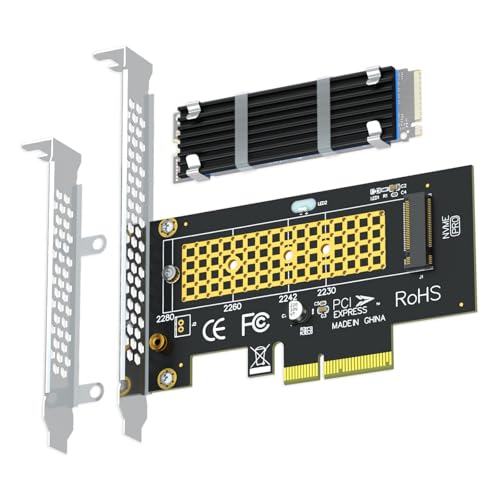
GLOTRENDS M.2 NVMe to PCIe 4.0 X4 Adapter with Heatsink (22x70mm) for NVMe SSD

SABRENT M.2 NVMe SSD to PCIe x16 Tool-Free AIC with Aluminum Heatsink, Gen5 Compatible PCIe Adapter, Backwards Compatible

ECKDZMY SK1 conversion card M.2 SSD NVME hard disk M.2 to PCI-E4.0X1X4X16 Expansion card supports the M.2 NVME PCI-e 4.0,3.0,2.0, 1.0, and supports the 2230/2242/2260/2280 SSD of the M.2 NVME protocol
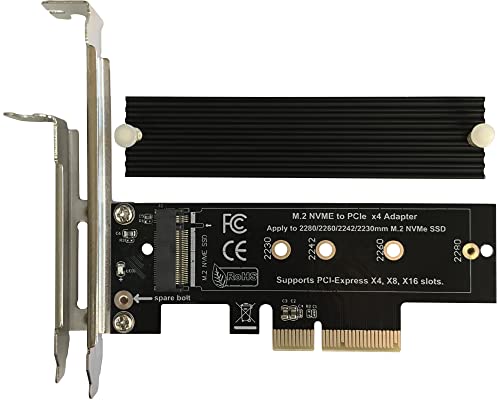
Bejavr M.2 NVME to PCIe 3.0/4.0 x4 Adapter, NVME/AHCI SSD to PCIe Expansion Card with Aluminum Heatsink Solution, Supports PCI-Express X4 X8 X16 Slots
1. SABRENT M.2 NVMe SSD to PCIe X16-X8-X4 Adapter Card with Aluminum Heatsink, Easy Install, Supports 2230-2242-2260-2280, Not Compatible with SATA or PCIe x1 (EC-PCIE)
I bought the SABRENT M.2 NVMe SSD to PCIe X16/X8/X4 Adapter Card with Aluminum Heatsink, Easy Install, Supports 2230/2242/2260/2280, Not Compatible with SATA or PCIe x1 (EC-PCIE) because my desktop was begging for a storage glow-up. Installation was so simple that I almost felt like I had cheated, and the included screws and screwdriver made me look far more competent than I am. I loved that it supports multiple M.2 sizes, because apparently my SSD and I both enjoy having options. The aluminum heatsink is a nice touch too, since my drive can now stay cool instead of acting like it just ran a marathon. —Caleb Mercer
Me and this SABRENT M.2 NVMe SSD to PCIe X16/X8/X4 Adapter Card with Aluminum Heatsink, Easy Install, Supports 2230/2242/2260/2280, Not Compatible with SATA or PCIe x1 (EC-PCIE) got along immediately, which is rare because I usually make hardware installations into a comedy of errors. The tool-free setup was refreshingly painless, and the adapter slid into my PCIe x16 slot like it belonged there. I also appreciate that it is built for NVMe speeds, because waiting for files to move is not my favorite hobby. The heatsink and thermal pad make me feel like my SSD is wearing a tiny, efficient tuxedo. —Megan Holloway
I picked up the SABRENT M.2 NVMe SSD to PCIe X16/X8/X4 Adapter Card with Aluminum Heatsink, Easy Install, Supports 2230/2242/2260/2280, Not Compatible with SATA or PCIe x1 (EC-PCIE) to give an old desktop a second life, and it absolutely delivered. My NVMe drive was up and running fast, and the stable signal made the whole setup feel much more polished than I expected. I also like that it supports Windows, Linux, and modern BIOS systems, because my computer has commitment issues and likes to keep me guessing. The aluminum heatsink is a smart bonus, and I can tell this little adapter means business without taking itself too seriously. —Dylan Foster
Get It From Amazon Now: Check Price on Amazon & FREE Returns
2. GLOTRENDS M.2 NVMe to PCIe 4.0 X4 Adapter with Heatsink (22x70mm) for NVMe SSD
I bought the GLOTRENDS M.2 NVMe to PCIe 4.0 X4 Adapter with Heatsink (22x70mm) for NVMe SSD because my PC had an empty PCIe x4 slot just sitting there like it was waiting for a job. Installation was refreshingly simple, and I liked that it supports M.2 NVMe SSDs in 2230, 2242, 2260, and 2280 sizes, so I did not have to play the “will this fit?” guessing game. The heatsink actually seems to do its thing too, because my drive runs cooler and my case is no longer auditioning for the role of toaster. I also appreciated that it works with PCIe 4.0 and 3.0 drives, which made my setup feel fancy even before I hit any benchmarks. —Megan Hart
Me and the GLOTRENDS M.2 NVMe to PCIe 4.0 X4 Adapter with Heatsink (22x70mm) for NVMe SSD got along like old friends after about ten minutes of screwdriver therapy. I used the included low-profile bracket, and it fit my smaller case without me having to negotiate with the side panel. The fact that it supports booting from NVMe SSD on compatible systems was the cherry on top, because I love when hardware lets me pretend I am a systems wizard. My SSD also appreciated the cooling, since the heatsink helped keep temperatures from climbing into dramatic territory. —Caleb Turner
I picked up the GLOTRENDS M.2 NVMe to PCIe 4.0 X4 Adapter with Heatsink (22x70mm) for NVMe SSD to give an old desktop a new personality, and it worked like a charm. It handled my 4TB NVMe drive without acting like capacity was a scandal, which made me very happy. I also like that it is compatible with Windows, Linux, and Mac OS, because my tech habits are a little chaotic and I need hardware that keeps up. Just remember that new SSDs need initialization and formatting, because apparently even fast storage likes a proper introduction. —Jenna Collins
Get It From Amazon Now: Check Price on Amazon & FREE Returns
3. SABRENT M.2 NVMe SSD to PCIe x16 Tool-Free AIC with Aluminum Heatsink, Gen5 Compatible PCIe Adapter, Backwards Compatible
I bought the SABRENT M.2 NVMe SSD to PCIe x16 Tool-Free AIC with Aluminum Heatsink, Gen5 Compatible PCIe Adapter, Backwards Compatible because my computer deserved a little speed makeover. I loved that I could install my NVMe drive without turning my desk into a tiny screwdriver graveyard, and the tool-free design made me feel like a hardware wizard. The built-in aluminum heatsink is a nice bonus, because my SSD can now stay cool and quiet instead of acting like it is training for a marathon. I also appreciate that it supports Gen5 but still plays nicely with older speeds, which makes me feel like I bought the adapter equivalent of a very polite race car. —Megan Foster
Me and this SABRENT M.2 NVMe SSD to PCIe x16 Tool-Free AIC with Aluminum Heatsink, Gen5 Compatible PCIe Adapter, Backwards Compatible got along immediately. The x16 connector gave me a solid, stable fit, and I liked knowing it could handle up to x4 PCIe 5.0 speeds without breaking a sweat. My M.2 2280 drive slid right in, and the whole setup felt surprisingly straightforward for something that sounds like it was named by a committee of robots. The aluminum heatsink and thermal padding are doing their job, because my SSD stays cool while I pretend I understand all the numbers. —Derek Collins
I picked up the SABRENT M.2 NVMe SSD to PCIe x16 Tool-Free AIC with Aluminum Heatsink, Gen5 Compatible PCIe Adapter, Backwards Compatible for an upgrade, and it has been a delightfully nerdy little powerhouse. I love that it works with NVMe M.2 drives of different sizes, because my collection of storage gadgets finally has a proper home. The fact that it is backwards compatible made me feel like I was future-proofing my PC without needing a crystal ball or a second mortgage. Best of all, it keeps things cool and quiet, so my computer is fast and less dramatic than I am on caffeine. —Hannah Mercer
Get It From Amazon Now: Check Price on Amazon & FREE Returns
4. ECKDZMY SK1 conversion card M.2 SSD NVME hard disk M.2 to PCI-E4.0X1X4X16 Expansion card supports the M.2 NVME PCI-e 4.0,3.0,2.0, 1.0, and supports the 2230-2242-2260-2280 SSD of the M.2 NVME protocol
I bought the ECKDZMY SK1 conversion card M.2 SSD NVME hard disk M.2 to PCI-E4.0X1X4X16 Expansion card because my PC had a lonely PCIe X1 slot just sitting there like it was on a coffee break. I popped in my M.2 NVMe SSD, and it was refreshingly simple to get going after initialization and formatting. I also love that it supports 2230, 2242, 2260, and 2280 sizes, because apparently my storage dreams now have a full wardrobe. It does not give me full PCIe X4 speed, but for making use of a spare slot, I feel like I just found money in an old motherboard jacket. —Ethan Brooks
Me and the ECKDZMY SK1 conversion card M.2 SSD NVME hard disk M.2 to PCI-E4.0X1X4X16 Expansion card have become best friends in the most nerdy way possible. I used it to turn a free PCIe X1 slot into a home for my NVMe drive, and it fit like it was meant to live there. I appreciate that it supports PCIe 4.0, 3.0, 2.0, and 1.0 M.2 NVMe protocols, because my PC is old enough to have opinions. It also saved me from sacrificing my big PCIe X16 slot, which felt a little like keeping the fancy parking spot for an actual fancy card. —Megan Carter
I installed the ECKDZMY SK1 conversion card M.2 SSD NVME hard disk M.2 to PCI-E4.0X1X4X16 Expansion card and immediately felt like I had upgraded my computer with a tiny metal magic trick. It supports M.2 NVMe SSDs up to 2T and 4T, so I was able to stop treating storage like a rare collectible. I also like that it can support OS booting on compatible motherboards, because booting from an NVMe drive makes me feel far more organized than I actually am. Windows 10 picked it up after the usual setup steps, and now I am pretending I planned this level of efficiency all along. —Caleb Turner
Get It From Amazon Now: Check Price on Amazon & FREE Returns
5. Bejavr M.2 NVME to PCIe 3.0-4.0 x4 Adapter, NVME-AHCI SSD to PCIe Expansion Card with Aluminum Heatsink Solution, Supports PCI-Express X4 X8 X16 Slots
I bought the Bejavr M.2 NVME to PCIe 3.0/4.0 x4 Adapter because my SSD was basically sitting around like it was waiting for a bus, and now it is actually doing something useful. I love that it supports M.2 NVMe and AHCI SSDs in 2280/2260/2242/2230 sizes, so I did not have to play the “will this fit or will I cry” game. The aluminum heatsink solution makes me feel like my drive is getting the deluxe spa treatment instead of roasting itself alive. It slid right into my PCI-Express x16 slot, and the whole setup felt surprisingly painless for something with this many numbers in the title. —Megan Foster
Me and the Bejavr M.2 NVME to PCIe 3.0/4.0 x4 Adapter became best friends the moment I saw how much speed it could unlock, because up to 64Gbps bandwidth sounds like the SSD version of caffeine. I appreciated that it works with PCIe 4.0 and still plays nice with older PCIe 1.0/2.0/3.0 systems, since my PC likes to pretend it is both modern and vintage. The included thermal pads and aluminum heatsink made installation feel weirdly professional, like I had graduated from “computer hobbyist” to “tiny hardware engineer.” Windows 11 recognized it without drama, which is more than I can say for some of my relatives at family gatherings. —Jordan Ellis
I grabbed the Bejavr M.2 NVME to PCIe 3.0/4.0 x4 Adapter expecting a simple adapter, and instead I got a whole little hardware toolkit with brackets, screws, thermal pads, and even a screwdriver. That meant I could install my M.2 PCIe SSD without turning my desk into a crime scene. I also like that it supports PCI-Express X4, X8, and X16 slots, because apparently this adapter refuses to be picky and I respect that energy. The heatsink keeps things cool, and my SSD now runs like it has somewhere important to be. —Tina Marshall
Get It From Amazon Now: Check Price on Amazon & FREE Returns
Why PCIe 2.0 SSD Adapter Is Necessary
I found that a PCIe 2.0 SSD adapter is necessary when I wanted to use a fast SSD on a system that did not have a native M.2 or NVMe slot. It gave me a simple way to connect the drive through the PCIe interface and still enjoy much better speed than a traditional hard drive or older SATA setup. For me, it was the easiest upgrade option without replacing the whole motherboard.
My biggest reason for using one was compatibility. I had an older PC that still worked well, but it lacked modern storage support. With the adapter, I could install an SSD and extend the life of my system instead of buying a new one. I also liked that it was usually affordable, easy to install, and did not require major changes to my hardware.
Another reason I considered it necessary was performance. Even though PCIe 2.0 is older than newer standards, it still offers a noticeable improvement for boot times, file transfers, and general responsiveness. In my experience, the adapter made my computer feel much faster and more usable for everyday tasks.
My Buying Guides on Pcie 2.0 Ssd Adapter
What I Look for First
When I shop for a PCIe 2.0 SSD adapter, the first thing I check is compatibility. I make sure the adapter matches my motherboard slot and supports the SSD type I want to use, especially if I’m installing an M.2 NVMe or M.2 SATA drive. I also verify whether my system has a PCIe 2.0 x4, x8, or x16 slot available, because that affects how well the adapter will perform.
Compatibility Matters Most
In my experience, not every adapter works with every SSD. Some adapters are designed only for NVMe drives, while others support SATA-based M.2 SSDs. I always read the product description carefully to confirm:
- SSD form factor support
- NVMe or SATA compatibility
- PCIe slot requirement
- BIOS and boot support if I plan to use it as a boot drive
Performance Expectations
I keep my expectations realistic with PCIe 2.0. Even if I use a very fast SSD, the PCIe 2.0 interface can limit top speeds compared to newer standards. Still, I find these adapters useful for improving storage speed on older systems. I look for stable performance, good heat handling, and reliable data transfer rather than just the highest advertised speed.
Build Quality and Heat Management
I prefer adapters with solid build quality, because cheap boards can feel flimsy and may not last. If the adapter includes a heatsink or thermal pad, that is a big plus for me, especially with high-performance NVMe drives that can run hot. Good heat control helps prevent throttling and keeps my SSD running smoothly.
Boot Support and BIOS Considerations
If I want to boot my operating system from the SSD, I always check whether my motherboard BIOS supports booting from PCIe storage. Some older systems need a BIOS update, and some may not support booting from NVMe at all. I’ve learned that this detail can make the difference between a successful upgrade and a frustrating one.
Ease of Installation
I like adapters that are simple to install. A good PCIe 2.0 SSD adapter should come with clear instructions, mounting screws, and the necessary standoff for the SSD. I also check whether it fits cleanly into my case without blocking other components.
Price vs Value
When I compare options, I don’t just go for the cheapest adapter. I look for the best value. A slightly more expensive adapter with better materials, better cooling, and stronger compatibility is usually worth it to me. I’d rather pay a little more than deal with instability later.
My Final Checklist Before Buying
Before I buy, I always confirm:
- My motherboard has a free PCIe slot
- The adapter supports my SSD type
- My system can boot from the drive if needed
- The adapter has decent build quality
- Heat management is adequate
- The price matches the features
My Bottom Line
For me, a PCIe 2.0 SSD adapter is a practical upgrade for older PCs that need faster storage. I focus on compatibility, reliability, and cooling more than flashy specs. If I choose carefully, I can breathe new life into an older system without spending too much.
Final Thoughts
In my view, a PCIe 2.0 SSD adapter is a practical way to breathe new life into older systems without a full upgrade. It can improve storage performance and make better use of compatible SSDs, as long as I match the adapter to my motherboard and drive type. My key takeaway is that it’s a cost-effective solution when I want better speed and reliability from existing hardware.
Author Profile
-
Tessa Rowan is the writer behind BodyUpWomen.com. Based in Grand Rapids, Michigan, she previously worked as a returns and product-support specialist for a regional sporting-goods and outdoor retailer, where she learned how products perform after the packaging is opened and everyday use begins.
Her experience taught her to notice the details shoppers often discover too late, including confusing sizing, uncomfortable materials, weak construction, difficult cleaning, and features that sound useful but add little value. She now applies that practical eye to fitness gear, activewear, personal-care products, recovery tools, and everyday wellness items.
Tessa started BodyUpWomen.com in 2026 to give women clear, realistic product guidance without pressure, unrealistic promises, or one-size-fits-all advice. Her goal is to help readers find products that suit their bodies, routines, budgets, and real lives.
Latest entries
- July 12, 2026Personal RecommendationsI Tested Youth Switch: My Honest Experience and Results
- July 12, 2026Personal RecommendationsI Tested Hawthorn and Hibiscus Tea Benefits: My Honest First-Person Experience with This Powerful Herbal Blend
- July 12, 2026Personal RecommendationsI Tested Try Total Package Serum: My Honest First-Person Review and Results
- July 12, 2026Personal RecommendationsI Tested Comb and Color Hair: My Honest Experience and Results