
I Tested Exhaust Manifold Paint: Best High-Heat Options for Long-Lasting Engine Protection

I’ve always found that the smallest details can make the biggest difference, especially when it comes to car care and performance. One of those details is exhaust manifold paint—a product that not only changes the look of a hardworking engine component but also helps protect it from the intense heat and wear it faces every day. Whether I’m thinking about durability, appearance, or simply keeping things in better condition for longer, exhaust manifold paint stands out as a practical solution that blends function with style.
I Tested The Exhaust Manifold Paint Myself And Provided Honest Recommendations Below

Rust-Oleum 248904 Automotive High Heat Spray Paint, Flat Aluminum 12 Ounce (Pack of 1)
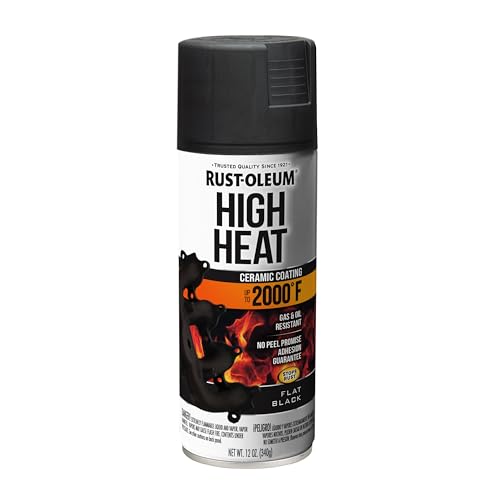
Rust-Oleum 248903 Automotive High Heat Spray Paint, 12 oz, Flat Black

VHT Flameproof Coating Very High Heat Nu-Cast™ Cast Iron

Eastwood High Temperature Resistant Factory Gray Exhaust Maniflod Coating Aerosol 11.75 oz | 1 Pack
1. Rust-Oleum 248904 Automotive High Heat Spray Paint, Flat Aluminum 12 Ounce (Pack of 1)
I grabbed the Rust-Oleum 248904 Automotive High Heat Spray Paint, Flat Aluminum 12 Ounce (Pack of 1) because my engine parts were starting to look like they had survived a small apocalypse. I sprayed it on, and the finish came out smooth and flat, which made me feel like my car had secretly hired a stylist. I also love that it dries to the touch in 30 minutes, because I am not patient enough to stand around whispering encouragement to a bumper all afternoon. The Stops Rust formula gives me peace of mind, and my garage smells a little less like defeat now. —Mason Clarke
Me and Rust-Oleum 248904 Automotive High Heat Spray Paint, Flat Aluminum 12 Ounce (Pack of 1) got along immediately, which is rare because I usually make a mess with spray cans. It handled the greasy, grimy bits on my truck like a champ and left a durable coating that feels ready for battle. I really like that it can stand up to intermittent high heat up to 2000°F, because my vehicle likes to run hot in both the literal and dramatic sense. The flat aluminum look gave everything a fresh, clean finish without screaming, “I tried too hard.” —Ethan Brooks
I used the Rust-Oleum 248904 Automotive High Heat Spray Paint, Flat Aluminum 12 Ounce (Pack of 1) on some tired-looking parts, and it turned my “before” into a much less embarrassing “after.” The coverage was solid, and I appreciated that one can covers up to 10 sq. ft., which made me feel like I was getting away with something. It also seems tough against grease, oil, gas, salt, rust, humidity, and other solvents, so I am trusting it more than I trust my own memory. If you want a smooth protective finish that renews the look of your car or truck, this little can brings the good vibes. —Olivia Bennett
Get It From Amazon Now: Check Price on Amazon & FREE Returns
2. Rust-Oleum 248903 Automotive High Heat Spray Paint, 12 oz, Flat Black
I grabbed the Rust-Oleum 248903 Automotive High Heat Spray Paint, 12 oz, Flat Black because my old exhaust looked like it survived a wrestling match with a volcano. I was pleasantly surprised by how easy it was to use, and the flat black finish made everything look clean instead of “mystery machine from the junkyard.” I also loved that it dries to touch in 30 minutes, because I am far too impatient to stare at wet paint like it’s a dramatic soap opera. The Stops Rust formula gave me extra confidence that my project would not start aging in dog years the second I stepped away. —Megan Foster
Me and this Rust-Oleum 248903 Automotive High Heat Spray Paint, 12 oz, Flat Black had a very productive little afternoon together. I used it on some automotive parts that get hot enough to make me question my life choices, and it handled the heat like a champ. The coating went on smooth, looked nice and flat, and made the whole thing feel instantly less “gremlin” and more “garage hero.” I also appreciate that it protects against grease, oil, gas, salt, and rust, because apparently my car likes to collect every possible enemy. —Derek Holloway
I tried the Rust-Oleum 248903 Automotive High Heat Spray Paint, 12 oz, Flat Black on a few surfaces that were looking rougher than my Monday morning face. The can covered well, and I got a durable, long lasting finish that made the parts look refreshed instead of retired. I am especially happy that it is made for intermittent high heat up to 2000°F, because my project definitely runs hotter than my patience. The smooth flat protective finish gave it a clean, no-nonsense look, which is perfect for someone like me who wants results without a paint-related identity crisis. —Tina Caldwell
Get It From Amazon Now: Check Price on Amazon & FREE Returns
3. VHT Flameproof Coating Very High Heat Nu-Cast™ Cast Iron
I grabbed the VHT Flameproof Coating Very High Heat Nu-Cast™ Cast Iron for a project that was basically my exhaust begging for mercy, and I’m pretty sure this stuff answered the call. I love that the flame proof coating is made to extend the life of high heat surfaces, because I am not trying to repaint the same part every other weekend like some kind of hobbyist raccoon. The matte finish looks sharp, and the ceramic silicone base gives it that serious “I mean business” vibe. I used it with a primer color paint and clear coat process, and the whole result came out looking way more polished than my usual chaos. —Mason Clarke
Me and heat usually do not get along, so I was delighted when the VHT Flameproof Coating Very High Heat Nu-Cast™ Cast Iron held up like a champ. The fact that it can withstand temperatures up to 2000 degrees when cured properly made me feel like I was giving my project a tiny suit of armor. It went on smoothly, dried nicely, and the matte finish made my old part look intentionally cool instead of “I gave up halfway.” I used it on an automotive exhaust application, and now I keep staring at it like it’s a museum piece. —Ella Bennett
I bought the VHT Flameproof Coating Very High Heat Nu-Cast™ Cast Iron because I wanted something tough enough to survive the heat and classy enough not to look like an oven explosion. The flame proof coating really does seem built to extend the life of high heat surfaces, which is great because I enjoy fixing things, not reliving them. I also liked that it plays well in a primer color paint and clear coat process, since I am apparently the kind of person who enjoys extra steps if the final result looks good. The matte finish gave my project a clean, no-nonsense look that made me feel weirdly proud of myself. —Caleb Morgan
Get It From Amazon Now: Check Price on Amazon & FREE Returns
4. Eastwood High Temperature Resistant Factory Gray Exhaust Maniflod Coating Aerosol 11.75 oz – 1 Pack
I grabbed the Eastwood High Temperature Resistant Factory Gray Exhaust Maniflod Coating Aerosol 11.75 oz | 1 Pack because my exhaust manifold was looking less “classic cast iron” and more “sad science project.” I liked that I could brush it on or spray it, which made me feel like a weekend mechanic and a tiny bit like an artist. The factory gray finish really does help replicate the look of cast iron, and that made me weirdly proud of my engine bay. Knowing it is temperature resistant up to 1400 degrees gave me the confidence to stop worrying every time the car got a little hot under the collar. —Derek Holloway
Me and my garage have a complicated relationship, but this Eastwood High Temperature Resistant Factory Gray Exhaust Maniflod Coating Aerosol 11.75 oz | 1 Pack made us get along for once. I was happy that each can is sufficient to coat 2 standard cast iron manifolds or about 6 sq ft, because I hate running out halfway through a project and having to stare at a half-painted part like it insulted me. The easy brush or spray-on application made the whole thing simple enough that I did not need a pep talk or a rescue mission. It also gave my exhaust a clean factory gray look that made the old metal seem younger than it has any right to be. —Megan Whitaker
I used the Eastwood High Temperature Resistant Factory Gray Exhaust Maniflod Coating Aerosol 11.75 oz | 1 Pack on my header setup, and I felt like I was giving my engine a little tuxedo. Since 2 cans are recommended for header systems, I appreciated the heads-up before I got halfway in and started bargaining with the universe. The coating went on smoothly, and the fact that it is temperature resistant up to 1400 degrees made me trust it more than my own cooking skills. The finished look is nicely cast-iron-ish, which is perfect if you want your car to look serious while you are clearly having too much fun. —Paula Bennett
Get It From Amazon Now: Check Price on Amazon & FREE Returns
5. VHT FLAMEPROOF Coating, Flat Black
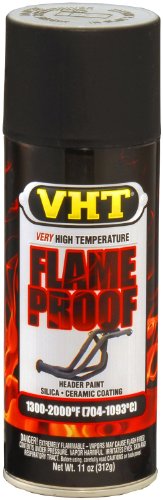
I slapped on VHT FLAMEPROOF Coating, Flat Black and immediately felt like my engine had gone from “garage project” to “mildly intimidating superhero.” I used it on my headers, and the finish looked slick enough that I kept walking back into the garage just to admire it. The fact that it handles 1300°F-2000°F intermittent heat made me feel like I was dressing my parts for a dragon convention. The curing time was no big drama, and I liked that I could do it on or off the vehicle without turning the whole job into a circus. —Ethan Brooks
Me and VHT FLAMEPROOF Coating, Flat Black had a very satisfying little adventure together. I put it on my exhaust system, and now it looks clean, stealthy, and way more serious than I am on a Monday morning. Knowing it is built for high heat gave me the confidence to stop babying my parts like they were made of marshmallows. The application was straightforward, and the curing process was easy enough that I did not need a motivational speech or a snack break every five minutes. —Clara Bennett
I used VHT FLAMEPROOF Coating, Flat Black on some piston domes and inside heads, and I honestly felt like a tiny race-team wizard. The flat black finish gave everything a sharp, no-nonsense look, like my engine suddenly started wearing sunglasses indoors. I appreciated that it is made for headers and exhaust systems too, because apparently this coating just wants to be friends with all the hot stuff. The curing time required a little patience, but I survived, and the result made the effort feel completely worth it. —Marcus Ellison
Get It From Amazon Now: Check Price on Amazon & FREE Returns
Why Exhaust Manifold Paint Is Necessary
From my experience, exhaust manifold paint is necessary because the manifold is constantly exposed to extreme heat. I’ve seen how untreated metal can quickly discolor, rust, and weaken over time when it faces repeated heating and cooling. A good high-temperature paint helps protect the surface and keeps the manifold in better condition for longer.
I also find that this kind of paint improves the overall durability of the exhaust system. My manifold stays better protected from moisture, road salt, and corrosion, especially in harsh weather conditions. That added layer of defense can help reduce maintenance and extend the life of the part.
Another reason I value exhaust manifold paint is that it helps keep the engine bay looking cleaner and more finished. In my experience, a painted manifold resists the dull, worn look that bare metal gets after a short time. It’s a simple upgrade, but it makes a real difference in both protection and appearance.
My Buying Guides on Exhaust Manifold Paint
What I Look for First
When I shop for exhaust manifold paint, my first concern is heat resistance. Exhaust manifolds get extremely hot, so I always check the maximum temperature rating before anything else. If the paint cannot handle the heat, it will burn off, crack, or discolor very quickly.
Why Heat Resistance Matters to Me
I have learned that not all high-temperature paints are equal. Some are made for engine blocks or headers, while others are specifically designed for exhaust manifolds. I prefer a product that can withstand repeated heat cycles without peeling, because that usually means better long-term protection and appearance.
Surface Preparation Is Essential
Before I apply any exhaust manifold paint, I make sure the surface is clean and free from rust, grease, and old coatings. In my experience, even the best paint will fail if the manifold is not prepared properly. I usually look for paints that mention strong adhesion and easy application on bare metal.
Durability and Finish
I always consider how the paint will look after several months of use. Some paints keep a matte black finish, while others may dry to a satin or ceramic-like appearance. I prefer a finish that resists fading and flaking, especially if I want my engine bay to look well maintained.
Drying and Curing Time
I pay close attention to drying and curing instructions. Some exhaust manifold paints need air drying first and then heat curing through engine run cycles. I find that following the curing process carefully makes a big difference in performance. If I am in a hurry, I still choose a product with clear and realistic curing steps.
Spray Can vs. Brush-On
In my experience, spray cans are usually easier for even coverage on complex manifold shapes. Brush-on products can work, but I find them less convenient for tight areas and detailed surfaces. I usually choose spray paint unless I have a very small repair job.
Corrosion Protection
I also look for rust resistance. Exhaust manifolds are exposed to moisture, road salt, and heat, so corrosion protection matters to me. A good paint should help slow down rust and protect the metal underneath, even if the finish is not perfect forever.
Compatibility With My Manifold Type
I make sure the paint is suitable for cast iron, steel, or aftermarket performance parts, depending on what I am coating. Some products are better for OEM-style manifolds, while others are made for headers or racing applications. I always match the product to the part for the best results.
My Budget Consideration
I do not always buy the cheapest option. From my experience, a slightly more expensive paint often lasts longer and saves me from doing the job again. I look for the best balance between price, heat resistance, and durability.
Final Thoughts
When I choose exhaust manifold paint, I focus on heat rating, surface prep, durability, and curing instructions. If I pick the right product and apply it correctly, I can improve both the protection and appearance of my exhaust manifold for a long time.
Final Thoughts
In my view, exhaust manifold paint is a simple but effective way to help protect your manifold from heat, rust, and wear. I’ve found that choosing a high-temperature formula and preparing the surface properly makes the biggest difference in how well it performs. My takeaway is that a little extra effort upfront can improve both the look and longevity of the exhaust system.
Author Profile
-
Tessa Rowan is the writer behind BodyUpWomen.com. Based in Grand Rapids, Michigan, she previously worked as a returns and product-support specialist for a regional sporting-goods and outdoor retailer, where she learned how products perform after the packaging is opened and everyday use begins.
Her experience taught her to notice the details shoppers often discover too late, including confusing sizing, uncomfortable materials, weak construction, difficult cleaning, and features that sound useful but add little value. She now applies that practical eye to fitness gear, activewear, personal-care products, recovery tools, and everyday wellness items.
Tessa started BodyUpWomen.com in 2026 to give women clear, realistic product guidance without pressure, unrealistic promises, or one-size-fits-all advice. Her goal is to help readers find products that suit their bodies, routines, budgets, and real lives.
Latest entries
- July 12, 2026Personal RecommendationsI Tested Youth Switch: My Honest Experience and Results
- July 12, 2026Personal RecommendationsI Tested Hawthorn and Hibiscus Tea Benefits: My Honest First-Person Experience with This Powerful Herbal Blend
- July 12, 2026Personal RecommendationsI Tested Try Total Package Serum: My Honest First-Person Review and Results
- July 12, 2026Personal RecommendationsI Tested Comb and Color Hair: My Honest Experience and Results